s

SmellyBlog

Making Incense Cones

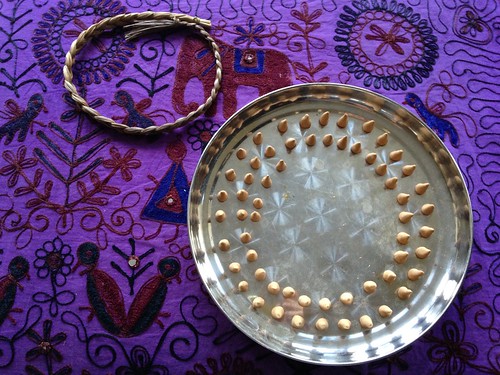
Sandalwood Incense Cones and Sweetgrass

This winter I've returned to my humble beginnings as an incense maker. Here are some photos from the meticulous production process of making Indian-style incense cones. I made them in two luxurious yet simple "flavours": Sandalwood and Agarwood.

I'm still experimenting with other ideas of more complex formulations, but for now I'm just wowed by what a simple incense (read: one note) smells like. With these two woods, that's really all you need...

Incense Dust
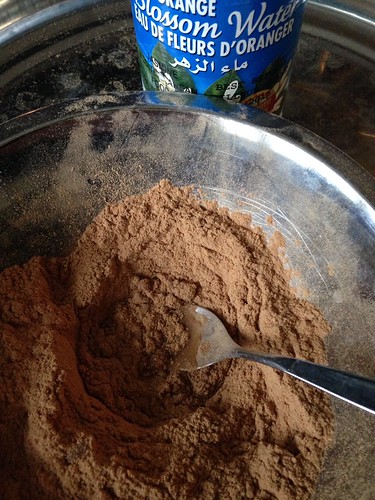
The most frustrating part of incense making is grinding. Bonus effect: if using an  effective heavy-duty electric grinder, the fine powder will go up your nostrils every time you check on the progress. Major sneezing fits may ensue. Or just an unregulated high from botanical substances. This one had tobacco leaves in it (grown for medicinal/ceremonial purposes). My nose did not agree with it and I had to put up with watery eyes and itchy nose that afternoon.

Incense Trail
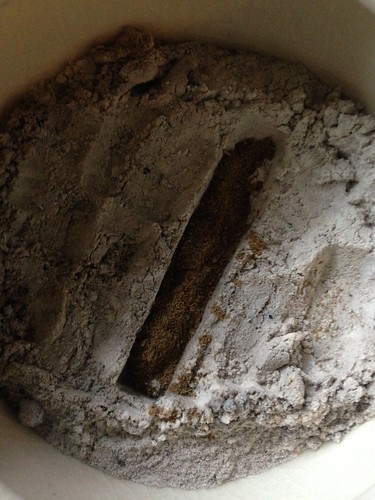
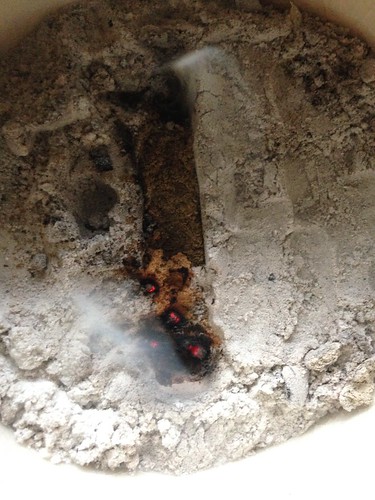
Indented incense trail, with the trial mix sprinkled inside it.

Incense Trail
The true test - incense trail. If this burns through to the other end, we're off to a good start. If it also smells wonderful - we're good to go!
Incense Making
Now that the blend has been perfected, and confirmed to both burn through and smell good, it's time to add water. It will form a clay-like putty. It can't be too try, nor too moist. Gotta be just right...

Incense "clay"
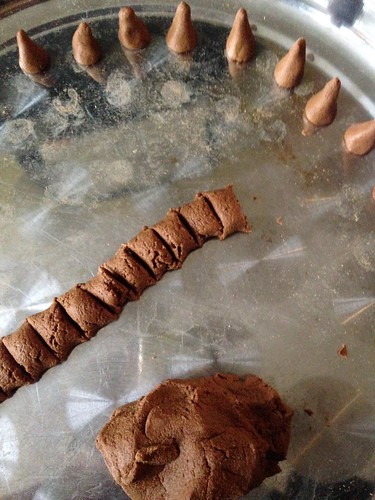
To make the incense cones uniform in size, I've rolled them into a snake and cut into little gnocchi-shaped sections. Each is rolled by hand to form a cone, and left to dry.

Incense Selfie
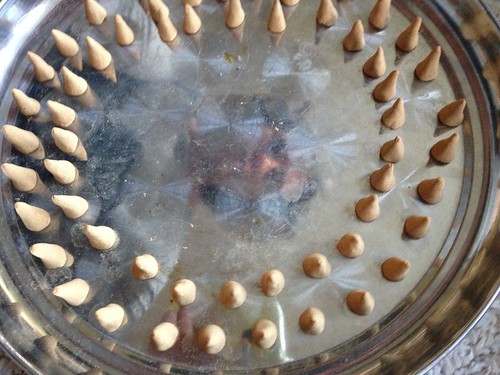
Incense maker's selfie of sorts... The incense is now ready to pack away - and burn!

Smelling Through Your Fingertips

A Captured Moment with my Grandson

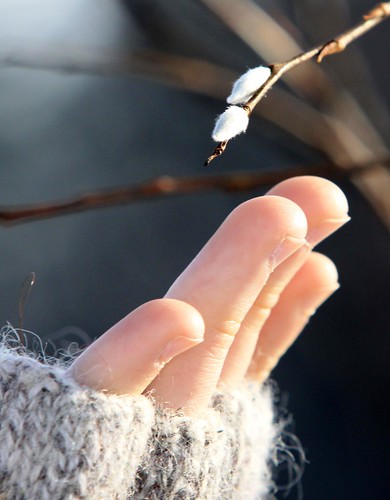
A fascinating BBC article (with a photo of what first looks like very hungry pairs of multi-fingered hands) about scientific findings about the sense of smell left me quite philosophical. Researchers discovered that scent receptors that are supposedly responsible for our sense of smell are not unique to the olfactory bulbs. The same type of receptors were found in the kidneys, heart, lung, gut and even in the tiny blood vessels in our skin!

The scientific implications of that are a better understanding of the interactions of various environments in our body, and how these work together to reject and eliminate toxins (as is done in our blood-filtering organs, the kidneys), pushing away foreign objects from our airway systems, and work in harmony with the the colonies of bacteria in our digestive system, are just among the discoveries described in this article.

These are fascinating discoveries, and I'm certain that down the road (and perhaps not that far from now), there will be some applicable medical and technological uses for this fascinating discovery. At the same time, to me personally this is yet another layer of knowledge that only confirms what I've been learning throughout my perfumery work and my personal experience with the sense of smell and how it relates to emotions.

The part that truly hit home for me is that these "smell receptors" are really chemical-sampling cells (which is how we've evolved from single-cell organisms like amebas to the complex creatures we are now), and their job is not limited to the brain (which the olfactory bulbs are part of). It makes sense to me just in the same way that we experience emotional pain in our brain like physical pain; and in  extreme emotional pain, it will be felt in the body as well, as if every fibre of one's being, to the last skin cell, is achingly tortured. How we interact with our environment has everything to do with how we evolved to be an interactive part of our environment. Emotions, smell and the tactile world are connected because this is how we "feel" life. Unlike the "higher" senses of sight and sound, these are very "hands-on" senses, that require a direct contact with a surface or a substance to be experienced, and that's what the cells or receptors need to be activated.

Our environment is not only external but also internal. So it only makes sense that we sense inside our bodies, and not just form the outside. Taking into account the internal milieu of emotions, it only makes sense that when we feel sad, angry or scared, there will be a change of chemicals in other organs besides our brain - the taste in our mouth becomes bitter when we are terrified, so why won't it became sour (perhaps) in our bellies when we are angry? And how much of our interpersonal interactions are actually through sounds (words and tone) or visual (facial expression) and how much of it really is all about the chemicals we transmit through a handshake?
It seems to me that even with not very intimate relationships, the experience of smell and touch that accompanies them communicates a lot more through this ability to "sample chemicals" from the environment. We can communicate a lot more through a handshake and the subconciously-perceptible scent we are emitting when we are feeling sad, happy, angry, disgusted or scared.

I'd be curious to hear what aromatherapy practitioners think about this. We already know that essential oils absorb readily through the skin into the blood stream and find their way with ease to the organ that needs healing. Do you reckon that the smell receptors in our skin and other organs have anything to do with aiding this process? And what about anosmiac people? Do they have less smell receptors in other areas of their bodies, or smell receptors that are less effective? My mother has a rare syndrome whose one of its symptoms is susceptibility to lung infections, and one of the unfortunate side effects is anosmia. Reading in this article the role this smell receptors have in assisting the cilia in the lungs to identify foreign bodies in the lungs and rid the lungs of them makes me wonder what happened first - the cilia's dysfunction, or does it have anything to do with smell receptors?

Scent Safari: Video Review for Komorebi


Maximilian Must Know Episode # 431 (Scent Safari - Ayala Moriel)

First video reviews ever for Ayala Moriel Parfums! And first review of my new perfume Komorebi - yayMaximilian compares it to Serge Lutens' Fille en Aiguilles, and says describes it as redolent of "woods, some forest funk, and this note of pine-like tree sap with some berries (...)" . FYI the vial titled "Forest Amber" is really Komorebi - before I had a name for it.

Also reviewed in this episode: Etrog, Film Noir, Espionage:
"The key word with these fragrances from Ayala is quality, development, power and performance (...) there is no gimmick (...) really high quality perfume made with passion and ingenuity and no shortcuts (...) This is as good as it gets. These are regal fragrances, fit for royalty". 

Blue Diamond

lotus bud

If I were to observe the middle-school version of me and spy on her reading habits via her library activities, I would be deeply concerned for her future not to mention current well-being. Among her favourite books were any titles whatsoever by Kurt Vonnegut, and similarly disturbing titles such as "Catch 22" and "One Flew Over the Cuckoo's Nest". One may argue that this is still better than what real-life tortured teen girls went through  in other books on her reading list, Christiane F. being one such example. Being only a merger 13 years old meant that these books were not read with a critical adult eye, but rather served as wan encouragement and an inspiration for awkward behaviours, because trying to fit in was not only a lost cause - but also a faulty one.* I'd marvel at anything out of the ordinary and sought different ways to look at the world. Such as focusing on very small details in my pencil sketches, or looking through a blue glass prism to see the world multiplied by its many facets.

Thankfully, those days are over and despite all odds, I survived teenager-hood with only a scratch or two. But some things became an inseparable part of me. Such as compassion to anyone who is different from the mainstream society or culture; and also a desire to look at things from an alternative angle, even if

Blue Diamond is an ancient perfume made by renown Danish chemist and author Steffen Arctander in 1979, and no longer in production. The gracious Heidi, a SmellyBlog reader and a long-time customer, has given me a sample when she was visiting in Vancouver this past summer. I heard about it before through another comment on this blog, but never seen it mentioned elsewhere. Heidi's curiosity about the notes in this perfume piqued my curiosity. She suspected the name "Blue Diamond" alluded to a precious blue flower: The legendary sacred Egyptian blue water lily, which is often mistakenly called "Blue Lotus". She was not far off the mark.

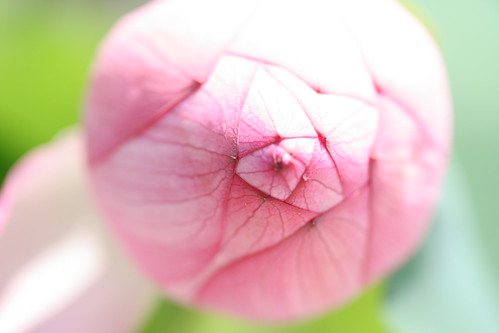
Upon opening the vial, a familiar yet mysterious fragrance welcomed me. As I was telling Heidi when I first smelled it - I could smell a high content of natural absolutes in the mix, perhaps tuberose, hyacinth or lotus - but not blue - rather, the pink variety (which is the true lotus). Visually speaking, I can see how a flower may be the inspiration - the unopened bud of lotus looks like a birds-eye view of cut-diamond or sapphire. The other dominant aspect of the composition is aldehydes, of the oily scalp type - C-11 or C-13, giving the perfume a skin-like, awkwardly intimate quality. The perfume is very potent and very long lasting, with the finishing notes being a pleasant cocktail of synthetic white musks.

* In modern perfumery terms, such philosophy is found in some awkward compositions, such as Tubereuse Criminelle - which instead of trying to make the tuberose smell pretty, it amplifies its ugly, rubbery and medicinal character and by exaggeration creates something beautiful.


Musk Malabi Fundraising Campaign for Syrian Refugees


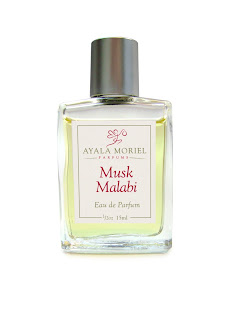
Musk Malabi, my fundraiser perfume to support Syrian Refugees, was launched a couple of years ago. There was only marginal interest in the cause, unfortunately, so I was unable to make any substantial contribution to this cause. 

Now that the refugee crisis has come to the forefront of the media - I hope you can help me raise enough funds to help sponsor refugees who are arriving to Canada in these tough times. For every 15mL bottle sold, $50 will be donated to a community-sponsored family; and from each mini bottle, $20 will be donated.

If you are in Canada, I urge you to find a community-sponsorship as well, or initiate one yourself in your community or workplace. According to Canadian law around sponsorship of immigrants, groups such as religious community associations (i.e.: non-profit NGOs) and community based organizations (i.e.: mosques, churches, synagogues, etc.) but also corporations can sponsor refugees, and any group of 5 or more Canadians that can provide a feasible settlement plan for the refugees. That is one way to guarantee the safe asylum of a family fleeing the horrors of the Syrian civil war, and much more meaningful way to invest smaller amounts of charitable money than to support a huge organization in which whatever contribution I could make will just be a drop in the bucket.

Of course, if you wish to donate to larger organizations - there are some that are more effective than others and which will utilize your donations more efficiently. Do your research first. For example, charities that are recommended for maximum help in the ground zero of the Syrian refugee crisis and that have a minimum administrative costs are listed in Charity Intelligence (Canada) and Charity Watchdog (USA).


Below is an excerpt from the original press release (March 2014) and the updates regarding pricing and donations policy.

Inspiring Peace & Harmony with Musk Malabi’s Olfactory Love Triangle
Vancouver, Canada, March 5th, 2014. Get caught in a love triangle with Musk Malabi Ayala Moriel’s newest limited-edition perfume Musk Malabi. Released to coincide with the spring equinox and Persian New Year, Musk Malabi is an intoxicating floral confection. Unabashedly feminine, subtly exotic and hopelessly romantic - the fragrance evokes the sensory experience of a passionate love affair.
Inspired by the traditional Middle Eastern dessert of the same name, Musk Malabi centers itself around rich, milky musk. Having grown up in Israel, the sights, sounds, and smells of the Mediterranean have always been a source of inspiration for Ayala Moriel, the company’s in-house perfumer. “What has always captured my imagination about malabi is its soft, evocative sounding name, and its unique fragrant combination of rosewater and neroli water”, explains Ayala. “Rose and orange blossom are such noble flowers yet oh so different.”
At the heart of the fragrance, neroli and rose come unexpectedly together with musk to create an unusual and mesmerizing triad. Musk plays cupid, pulling all the strings in between and drawing the lovers (rose and neroli) together. Designed to smell as close as possible to deer musk, the botanical musk brings an effortless fluidity to this magnetic fragrance. A company that prides itself on being all-natural and free of animal cruelty, all of Ayala’s fragrances are created using botanical essences.
With spicy notes of cardamom and coriander as the opening act for voluptuous rose and prudent neroli, the top and heart notes rest on a silky bed of atlas cedarwood, botanical musk and Tahitian vanilla. Light-hearted yet mysterious, Musk Malabi is a fragrance unlike any other and will transport one effortlessly to the exotic Middle-East, jet-lag free.
Top notes: Bitter Orange, Cardamom, Coriander, Blood Orange
Heart notes: Turkish Rose, Bulgarian Rose, Tunisian Neroli, Egyptian Orange Blossom
Base notes: Atlas Cedarwood, Botanical Musk Accord, Tahitian Vanilla

Available in eau de parfum 4ml ($69) and 15ml ($180) via www.ayalamoriel.com. For every 15mL bottle sold, $50 will be donated to a community-sponsored family; and from each mini bottle, $20 will be donated. 


Back to the top