s

SmellyBlog

FRAGments Summary by Architecture of Perfume

Visit Architecture of Perfume, Maggie Mahboubian's blog, to read her summary of the panel discussion, show & pop-up shop she organized last month in Los Angeles.
I was not there in person, but participated as an absentee vendor with 5 of my perfumes which, according to Maggie's report were "emotionally charged (... and) brought forth tears, smiles and memories".

Looking forward to more project together with this amazing collective of perfumers from across North America!

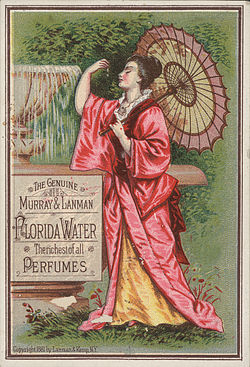
Florida Water

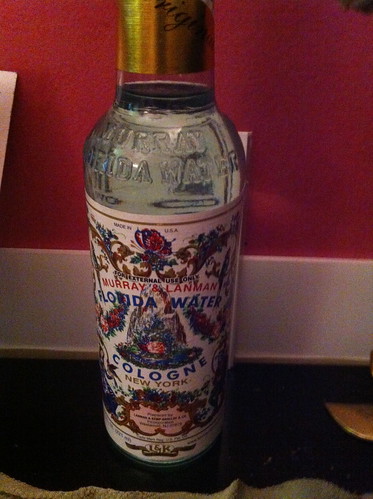
Many years ago, I read about Florida Water in Poucher's excellent book "Perfumes, Cosmetics & Soaps". But it was not till last Thursday, that I stumbled upon  big splash plastic bottle of the real thing by Murray & Lanman at an acquaintance's home in Vancouver's East Side.

It was a hot day, and I was stressed out running too many simultaneous projects in preparation for yet another long trip (I think I've turned into one of those creatures who "divide their time" between more two or more places. It sounds enticing on paper; but is uber-stressful in reality.

I splashed a generous dose all over my wrists and spilled some more on my white shirt. That Florida Water was refreshing yet calming; familiar yet strange. Minty citrus eau-de-colonge type mingled with intense spicy notes of cassia and cloves, a combination that inevitably brings to mind the popular coke beverages (based on the contrast between lime, cassia bark and clove buds) - but not so much that it makes you feel sticky. By the looks of the bottle though, you'd think it's a flavouring syrup for sherberts or sodas, what with the rather squishy plastic bottle and all...  

Apparently, this delightful little piece of fragrant history (formulation dating more than 100 years ago, in 1908 - though Florida Waters have been around as early as the beginning as the 1800's) can be had for $20 in Latin stores on Commercial Drive - and even cheaper than this online. I decided to trace back that formula and try to blend it myself this morning at my studio. The morning kinda turned into night and here I am reporting at the end of yet another rather hectic day!

Florida Water

Poucher divulges two formulations, slightly differing from one another, both appear on page 325 in my 1959 edition of the 2nd volume:

No. 1181
15 Lavender oil, French
5 Portugal oil
25 Bergamot oil
10 Petitgrain oil, Paraguay
1 Eugenol
1 Cinnamic aldehyde
5 Rose geranium oil
2 Oleo-resin orris
1 Musk ambrette
200 Orange flower water triple
800 Alcohol, 90 per cent
-----
1065

No. 1182
5 Neroli oil, bigarade
5 lavender oil, English
30 Bergamot oil
2 Limes oil
2 Cloves oil
3 Cassia oil
1 Cinnamon oil
5 Rose otto, synthetic
2 Amber, synthetic
100 Orange flower water triple
900 Alcohol, 90 per cent
----
1055

I decided to set off to make my own formula, based primarily on the 2nd version (as Poucher considered its result to be a "better product", yet substitute the synthetic rose otto with the real thing (Bulgarian rose otto, to be exact). Additionally, and most naturally, my amber bases aren't synthetic either, and the one I used is my own secret formula (well, it's not that secret, as I've shared it with numerous students: I've decided to use what I call "Amber No. 3").

While both are pleasant enough, and I can only imagine how wonderful they will behave if refrigerated and splashed on the skin on a hot day - they are still rather simplistic, and lack the bracing mintiness that I loved about that Murray & Lanman formulation. They read more as cosmetic preparations (Perhaps facial tonic or an aftershave?).  I'll try to pick up a "copy" at the Latin grocery stores on the Drive tomorrow, and if I'm lucky will also try to make my own "Commercial Drive" rendition of this all-American eau.

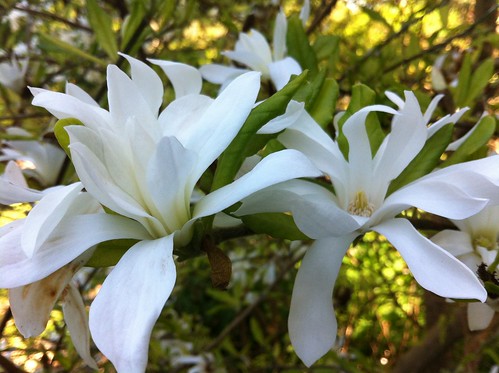
Magnificent Magnolia

Magnolia grandiflora
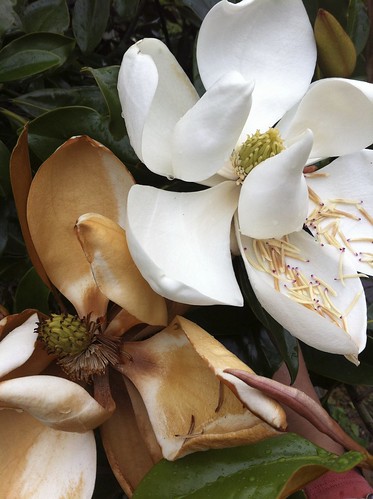
Magnolia grandiflora, a photo by Ayala Moriel on Flickr.
White magnolias are now in season, and with my Floriental week came students from different cultural background, including a Southern native who loves magnolias even more than I do! I also learned that the red seeds of magnolia have a resinous-sweet, spicy and fruity odour of their own (which I'll be following closely in the next couple of weeks).

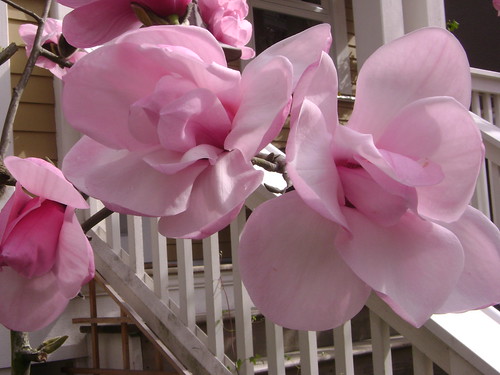
Magnolias deserve far more attention in the perfume world than they do. This glorious flower has such a unique persona, with a light yet complex floralcy underlined with the robust fruitiness of peach and fresh apricot, delicate citrus-like freshness, and a certain almost leafy-herbaceous quality. Some magnolias (as the Magnolia grandiflora pictured above) may even smell aldehydic-oily-skin like.

Michelia Alba by Ayala Moriel
Michelia Alba, a photo by Ayala Moriel on Flickr.

Where Arctander lacks, Poucher fills in much more detail about magnolia speices and history, as well as the odour of their flowers: "the perfume of the majority of species of the Magnolia is exotic, and the fragrance resembles that of a ylang-lily complex, with a shading of clove and a top note of lemon" (W.A. Poucher, "Perfumes, Cosmetics and Soaps Vol. 2, 1959, p. 165). In his compounding notes, he suggests using a muguet-like base, substituting nerol for rhodinol; and using high quality citral for the lemony effect.

Magnolia (Magnolia grandiflora) is an iconic flower of its native American Southeastern states of Virginia, Florida,  eastern Texas and Oklahoma. According to wikipedia "M. grandiflora contains phenolic constituents shown to possess significant antimicrobial activity. Magnolol, honokiol and 3,5′-diallyl-2′-hydroxy-4-methoxybiphenyl exhibited significant activity against Gram-positive and acid-fast bacteria and fungi. The leaves contain coumarins and sesquiterpene lactones. The sesquiterpenes are known to be costunolide, parthenolide, costunolide diepoxide, santamarine and reynosin".

As it turns out, white magnolia headspace scent primarily owes its characteristic balance to three different molecules: verbenone (18%), isopinocamphone (9%), and (Z)-jasmone (27%). While the first two are green and camphoreous-medicinal, together with the (Z)-jasmone creates a completely new and utterly floral harmony that is greater than the sum of its parts.

Magnolia

Michelia champaca is a whole other story though related closely to the magnolias we are familiar with in North America. I've discussed champaca at great length at a previous chapter of the Decoding Obscure Notes series. However, I'd like to add here comments on the chemical constituents - which are quite different and explain quite well some of its complexities. Champaca's headspace contains methyl benzoate, phenethyl alcohol (a light rose alcohol), phenylacetonitrile, indole (accounting for its animalic undertones) and methyl anthranilate (which creates its similarity to heady orange blossom and ylang ylang), along with sesquiterpenes, e.i. (E,E)-alpha-farnesene, ionones, e.i. dihydro-beta-ionone, (Z)-methyl-epi-jasmonate, and other aromatic esters.

White magnolia (Michelia alba) is in fact a hybrid between Michelia champaca and Michelia montana - both of which originate in Indomalaya ecozone (South Asia, Southeast Asia and parts of China). Most of it today is produced in China, either as an essential oil or a CO2, a rather mobile liquid with a light amber-orange colour and an intensely fruity yet fresh, peach-like aroma and slight green and clean notes and hints of fresh gardenia. It neither has the typical "white floral" quality (methyl antrhanilate), nor any animalic qualities, which is unusual for flower essences, and is refreshing departure from all the jasminey indole, paracresyls and the like.

Magnolia is Maurice Roucel's signature note, which discerning noses might notice in many of his perfumes, i.e. Tocade, l'Instand de Guerlain). Some of my favourite perfumes contain magnolia - such as Opium Fleur de Shanghai. White magnolia is one of my absolute favourite notes, ever.  I've incorporated it into numerous perfumes and compositions (including the now-defunct Magnolia Petal, a magnolia soliflore): from the heavy and sultry Razala, to the light-as-sea-breeze of New Orleans. It's a supporting note in The Purple Dress, which is centred around her east Indian relative, champaca; it is part of the fantasy notes of Hanami and l'Écume des Jours; and gives a balance to rosewater and vanilla in Cabaret; and in a custom-scent with osmanthus and Japanese incense for my dear friend Noriko and her jewelry line Dancing Leaf Designs. 

Smells Like Canada, 2013 Edition...

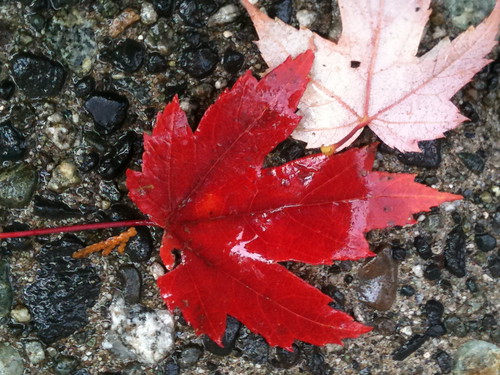
Maple & Asphalt

Happy Canada Day!

Last year I did a little post and giveaway for Canada Day, which was spontaneous and completely improvised... Today I'm preoccupied with teaching my Floriental week-long intensive course, so I'll keep it short.

 I'd like to add a few more smells to the growing list of Canadian odours I'm fond of and sentimental about:

Artemisia:
Artemisia is the true (Latin) name of what most refer to as "sage". This sacred plant is burnt by the First Nations of Canada at the beginning of rituals to clear space of all negative energy. I begin with this unique plant as a gesture to the original people of this country and as a gesture for healing for the many wounds that the Europeans have inflicted on them ever since landing in the "New World". The local "Sage" has an overwhelmingly intoxicating aroma (wormwood is the only comparison I can make - and technically it IS wormwood). Tannin, acrid, full of ketones and strongly herbaceous and medicinal-bitter. That should make all the negative stuff go away, for sure. 

Elderflower: 
Elderflowers have became an annual obsession last year, when I made cordial for the first time from flowers I bought at the farmers' market; followed by a few more batches of cordial and tinctures from wild-foraged flowers. Their scent has a unique character, simultaneously fruity-berry-like (cassis comes to mind) as well as honeyed-floral and slightly green. If you missed the foraging season, try buying dry flowers and mixing them with osmanthus. Also, Shaktea's Elderlower Cantaloupe Tea is spectacular (green darjeeling with elderflowers, cantaloupe, rhubarb and other botanicals). It makes a fantastic iced tea as well.

Juniper and Canadian Gin:
Juniper are a quintessential foresty scent that is unique as it is not just a straighforward coniferous scent; but also woodsy and spicy at the same time, with a clean and elegant appeal. 
A few years ago, the most exotic gin you can get was Tanquary Ten and Hedricks' Gin. This week, I was pleasantly surprised to find the shelves at the liquor store brimming with local offerings, including oak-aged gin from Vancouver Island, and this particularly strange number, Ungava gin, featuring arctic botanicals such as Nordic juniper berries, rose hips, Labrador tea, cloudberry, crowberry and an "arctic blend" of secret botanicals. It has a beautiful bright yellow colour, and goes well with elderflower liquor, bitters or cordial to make a very refreshing and Canadian-forest like cocktail!

Red Cedarwood:
Nothing says "Pacific Northwest" better than red cedar (also known as cherry cedar). The oil is hard to come by, and is a little harsh and intensely smoky, but also got some interesting fruity-berry nuances that are not unlike cherries. It also strangely reminds me of the Canadian whiskey, Crown Royal: Burning yet sweet.


Castoreum:
Castoreum is probably one of Canada's most important contribution to the world of perfumery. It goes oh so well with birch, another Canadian tree reminiscent of wintergreen, and that can be produced into "birch tar" by destructive distillation.
 Douglas Fir:
Douglas fir is a uniquely fragrant tree, also special for the Pacific Northwest. Its needles are deliciously packed with vitamin C and can be added to your drinking water for an added tangerine-like flavour, and - vitamin C. In the springtime, pick the new buds that are as soft as silk tassels. Dry them and prepare a sweet and sour citrusy wild tea. It's also wonderful blended with jasmine tea, which reminds me of my perfume Fetish (the perfume features the deliciously jam-like balsam fir absolute).

Rhubarb:
Sliced rhubarb reminds me of the ocean and ozone and it is ever so refreshing with its sour crunch. Also a recent discovery of mine (and I'm sure the plant is not unique to Canada but also is ever so popular all across North America); but to me it's as distinctively Canadian as cranberry and maple.

Tobacco:
Also a sacred plant to the First Nations, Tobacco was used for healing and for the famous "Peace Pipe". It's use in perfumery is limited, but it makes its mark in the Chypre-Tobacco category and in Leathery perfumes. Also will go well with the abovementioned birch.

Leave a comment with more ideas for what smells like Canada (and Native American botanicals of significance), and enter to win a mini of Immortelle l'Amour - which is about as Canadian as it can get, reminiscent of maple syrup poured over hot cinnamon waffles!

Ayala Moriel Parfums at FRAGments

FRAGments is tomorrow - Underground, Artisan and Indie Perfume Event/Collective, at the
cabinet-of-curiosities studio of eclectic sculptor and patron to the arts, Clare Graham.

I'd like to present to you the mini-collection that will be representing Ayala Moriel Parfums at this show. My intern Alicia Arruda and I have spent the week indulging in each and every one of them, and are excited to share with you our experience with them and why we think our friends, fans and customers in Los Angeles are going to love them!

Cabaret is deliciously sultry with creamy vanilla absolute, dark coconut, orris root and tropical magnolia, it is no question why this scent, which evokes images of nights spent dancing on the beach, will be perfectly suited for sunny Los Angeles.

Fetish is a scent that is as sexy as it's name. Fetish is flirtatious but surprisingly complex and while it first teases with a sweet citrusy opening, it gradually fades into a soothing, refreshing scent with notes of apricot scented green tea, jasmine sambac, lemongrass, orris root, Himalaya cedarwood and fir. The scent's cheerful and bubbly spirit make it another perfect choice for Los Angeles's FRAGments where it will be featured! Film Noir was the first one I packed for the show. What better suited scent for the city where so many films of this genre came from?
As dark as Norma Desmond's private screening room Sunset Boulevard; and even darker than the soul of the genre's script writers - Film Noir doesn't even have any top notes. Or heart notes. It's all about musky patchouli, with just enough cruelly spicy dark cacao, and cool bitter myrrh from the catacombs to spark your imaginations.


Zangvil 
was inspired by the texture of cashemere wool on bare skin.
It's a sexy gourmand, centered with ginger and amber at its core, complemented by sparkling notes of wild orange, sensual honey, botanical musk and spicy ginger lily. Try it tomorrow on your own skin!


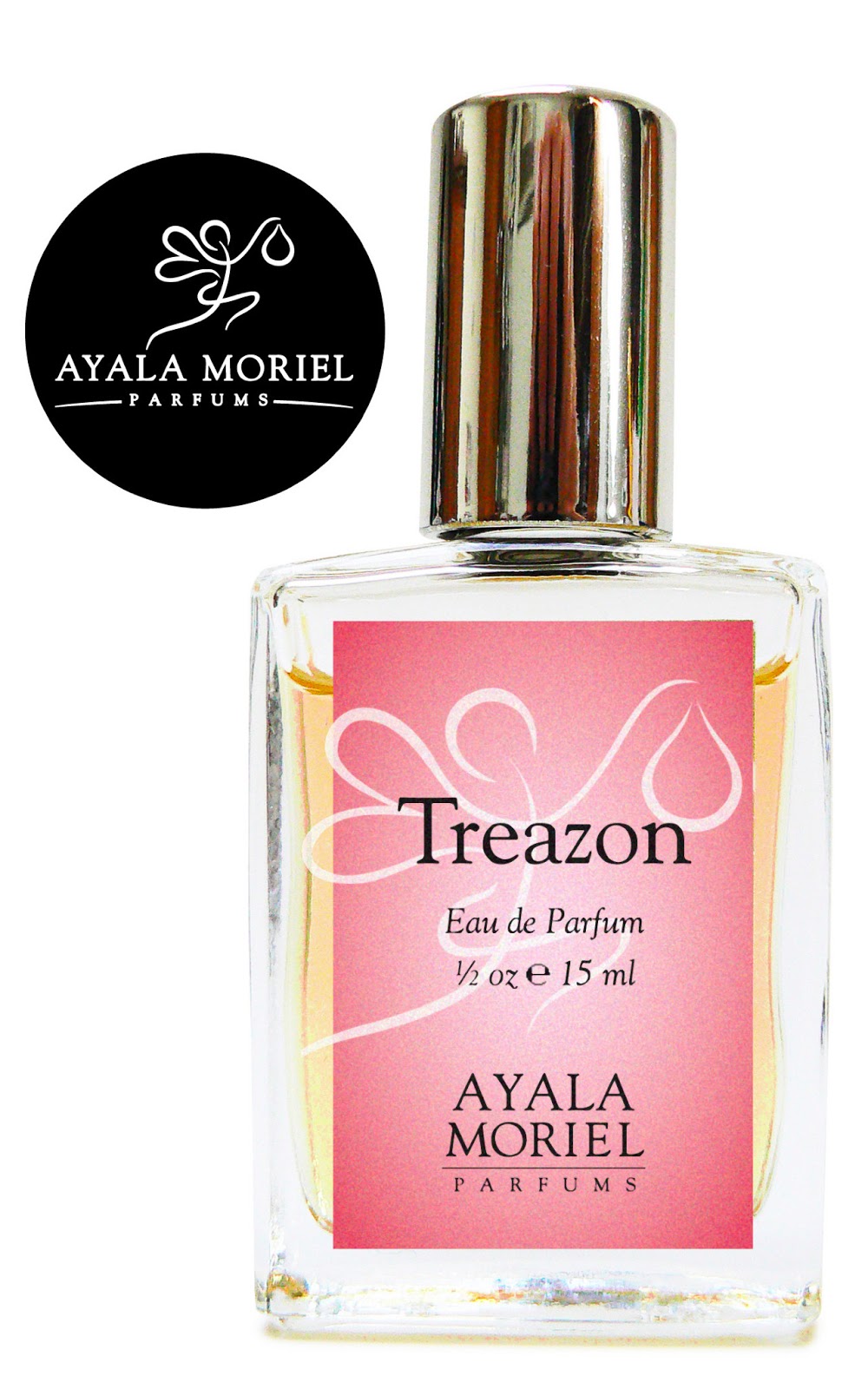
Last but not least - Treazon, which is my newest perfume. The star of the scent is the narcotic night-blooming tuberose. A surprisingly wearable scent, Treazon is bold as it contrasts the floralcy of tuberose with medicinal-fruity notes of wintergreen and cassis, spicy notes of cinnamon and star anise, and gourmand nuances of dark vanilla, and last but not least - the animalic notes of African Stone and indolic orange blossom. Like all grand-tuberoses, Treazon has a strong lineage to the classic and controversial fragrance “Fracas” and is already gathering a cult following.
 

Treazon was dubbed "breathtakingly beautiful" by both The Non Blonde and Now Smell This (who immediately added it to their "to-buy" lists - the greatest compliments from ladies with such fine taste in perfume!, and is an 2013 Indie FiFi Award Nominee. 


Where:

MorYork Gallery
4959 York Blvd
Highland Park
Los Angeles, CA
90042
 
When:
Saturday June 22, 2013 (that's tomorrow!)
11am-5pm

What:
11am-12pm, Moderated Discussion Session with perfumers
12pm-5pm Pop-up Shop, with emerging and established, leading perfumers-artisans-artists from across North America (including Dawn Spencer Hurwitz, Persephenie* and Yosh).
* Persephenie will present an experimental olfaction project.

P.s. Due to schedule conflict, I won't be able to attend in person; but my perfume friend, Faith Frenz, will be there to help you make your selections. 
Back to the top