Vernal Equinox & Hyacinths
Happy Persian New Year!
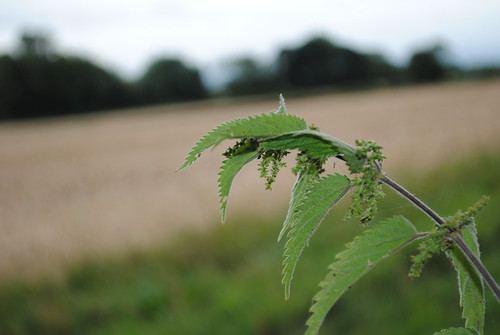
Today is the vernal equinox, where the Persian New Year begins. Hyacinth is one of the symbols of this ancient holiday, and I’m excited to share a photograph of a related beautiful wild plant: the Hyacinth Squill (Scilla hyacinthoides). It may not be as fragrant as the grape hyacinth found on the altar of most Persian homes, but it is a strikingly beautiful flower to find in the wild, in the mountainous Mediterranean woods.
Sonbol (Farsi for Hyacinth) is one of the Haft Seen (7 S’s), and symbolizes fertility and continuation - and brings the blessings of life and beauty to the new year. Think about it: a bulb has been buried in the dirt since last year, survived the dry summer, storing its energy for the right timing. A flowering bulb is an act of faith in life and renewal; but also an act of madness. There is no guarantee that the hospitable conditions that triggered the blossom will continue long enough for it to come into seed. The creation of new life requires gambling one’s own life, in other words: risking death.
Life and death take different faces, shapes and forms as the cycle of seasons evolve. Winter might seem like a deep sleep (if not death itself) in the colder parts of the world, while summer is bursting and buzzing with life; while in the hotter and dryer countries, the harshness of the sun is lethal and only the rainy winter season will bring relief and encourage any growth... In the transitional seasons, it’s a balancing act between the two: life giving way to death in the autumn, as fruit rot and allow the pure essence (seed) to preserve itself. In springtime, the force of life is so strong it will push through anything - ice, frozen earth and even flood - in order to renew the cycle with the visual and fragrant botanical orgy also known as wild flowers.
The aroma of hyacinth is sadly not one that is easily found in natural perfumery. I’ve been fortunate to have had hyacinth absolute on my palette at some point; but those days are long gone. The absolute had a very different character than the fresh flower, as it was sweeter and deeper. But that’s no longer a surprising result for me in the world of extraction. I’ve used it in more formulations than I should have (Rainforest, Tamya, Song of Songs, Sagittarius), but was somehow able to recuperate once my supplies ran out.
Wild hyacinths can be found in the eastern Mediterreanean region (i.e.: Israel, Lebanon, Turkey). There are far fewer flowers on the wild plants, while the cultivated variety (aka “Grape hyacinth”) has very fleshy flowers, filled with water, and with an almost overbearing heady aroma that is both green, sharp yet balsamic-sweet and with fruity, full-bodied undertones. The fresh hyacinth flowers owe their scents to several odorants, including 3,7 dimethyl-1,3(E),5(E)-octatriene-7-ol and (E)-cinnamic alcohol and ethyl 2-methoxybenzoate.
Since the pioneer days of Vent Vert by Balmain (1947), the use of hyacinth note in perfumery was secured in green florals and green-aldehydic Chypres. It is therefore no surprise that hyacinths have been in vogue int he 1970’s, when this genre was at its peak. Notable perfumes with a hyacinth note include mostly these two genres, with the occasional heady white floral such as the original Chloe and Fracas:
Amazone (Hermes), AnaisAnais (Cacharel), Chamade (Guerlain), Cristalle Eau de Toilette, Deneuve (1986), Envy Gucci (1997), First Van Cleef & Arpels (1976), Fleur No. 1 (1000Flowers), Laura Ashley No. 1, No. 19 (Chanel), Ombre de Hyacinth (Tom Ford), Parfum d’Ida (Neil Morris), Pêche noir (Envoyage Perfumes), Private Collection (Estee Lauder), Safari (Ralph Lauren), Silences (Jacomo) and Wrappings (Clinique). Oltremare (Bois 1920) presents an unusual context for hyacinth, comprising of woodsy musks and tea-like nuances.
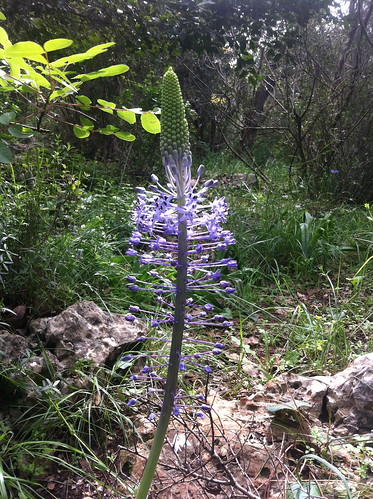
Today is the vernal equinox, where the Persian New Year begins. Hyacinth is one of the symbols of this ancient holiday, and I’m excited to share a photograph of a related beautiful wild plant: the Hyacinth Squill (Scilla hyacinthoides). It may not be as fragrant as the grape hyacinth found on the altar of most Persian homes, but it is a strikingly beautiful flower to find in the wild, in the mountainous Mediterranean woods.
Sonbol (Farsi for Hyacinth) is one of the Haft Seen (7 S’s), and symbolizes fertility and continuation - and brings the blessings of life and beauty to the new year. Think about it: a bulb has been buried in the dirt since last year, survived the dry summer, storing its energy for the right timing. A flowering bulb is an act of faith in life and renewal; but also an act of madness. There is no guarantee that the hospitable conditions that triggered the blossom will continue long enough for it to come into seed. The creation of new life requires gambling one’s own life, in other words: risking death.
Life and death take different faces, shapes and forms as the cycle of seasons evolve. Winter might seem like a deep sleep (if not death itself) in the colder parts of the world, while summer is bursting and buzzing with life; while in the hotter and dryer countries, the harshness of the sun is lethal and only the rainy winter season will bring relief and encourage any growth... In the transitional seasons, it’s a balancing act between the two: life giving way to death in the autumn, as fruit rot and allow the pure essence (seed) to preserve itself. In springtime, the force of life is so strong it will push through anything - ice, frozen earth and even flood - in order to renew the cycle with the visual and fragrant botanical orgy also known as wild flowers.
The aroma of hyacinth is sadly not one that is easily found in natural perfumery. I’ve been fortunate to have had hyacinth absolute on my palette at some point; but those days are long gone. The absolute had a very different character than the fresh flower, as it was sweeter and deeper. But that’s no longer a surprising result for me in the world of extraction. I’ve used it in more formulations than I should have (Rainforest, Tamya, Song of Songs, Sagittarius), but was somehow able to recuperate once my supplies ran out.
Wild hyacinths can be found in the eastern Mediterreanean region (i.e.: Israel, Lebanon, Turkey). There are far fewer flowers on the wild plants, while the cultivated variety (aka “Grape hyacinth”) has very fleshy flowers, filled with water, and with an almost overbearing heady aroma that is both green, sharp yet balsamic-sweet and with fruity, full-bodied undertones. The fresh hyacinth flowers owe their scents to several odorants, including 3,7 dimethyl-1,3(E),5(E)-octatriene-7-ol and (E)-cinnamic alcohol and ethyl 2-methoxybenzoate.
Since the pioneer days of Vent Vert by Balmain (1947), the use of hyacinth note in perfumery was secured in green florals and green-aldehydic Chypres. It is therefore no surprise that hyacinths have been in vogue int he 1970’s, when this genre was at its peak. Notable perfumes with a hyacinth note include mostly these two genres, with the occasional heady white floral such as the original Chloe and Fracas:
Amazone (Hermes), AnaisAnais (Cacharel), Chamade (Guerlain), Cristalle Eau de Toilette, Deneuve (1986), Envy Gucci (1997), First Van Cleef & Arpels (1976), Fleur No. 1 (1000Flowers), Laura Ashley No. 1, No. 19 (Chanel), Ombre de Hyacinth (Tom Ford), Parfum d’Ida (Neil Morris), Pêche noir (Envoyage Perfumes), Private Collection (Estee Lauder), Safari (Ralph Lauren), Silences (Jacomo) and Wrappings (Clinique). Oltremare (Bois 1920) presents an unusual context for hyacinth, comprising of woodsy musks and tea-like nuances.