
s

SmellyBlog

Misia


Misia, the new bird in Chanel's flock of exclusive scents has pleasantly surprised me with its soft, down-like softness, warmth and retro sweetness. It immediately brings to mind candied violet petals, with its overdose of alpha ionones, which dominate the opening, giving it the characteristic cedar wood effect. This balances the sweetness of the composition, addinga woody, dry yet powdery and soft air to it. This is quickly taken over by juicy, fruity notes of a plush, dark-red rose. Raspberry and plum notes rule supreme with every stroke of this bold bluish-red lipstick. The iconic Lipstick Rose comes to mind, as well as the scent that pervades most of the current Guerlain cosmetics. But more on points of references later. While there is more than a gourmand hint to Misia, it does not in the least smell too obviously dessert-like, nor trashy. It does, however, give it a most addictive character. As the fruit and rose soften and become rounder, the sweet supporting base note begin to emerge, and they are the perfume-world equivalent of caramel: tonka bean, with its slightly bitter, powdery qualities of almond rocca; and benzoin, which is like liquified brown sugar, with a depth to its sweetness that stops it from being cloying. There is something about the dry down that is not how I'd expect this to end. It's thankfully not too powdery, nor too musky; and sweetness is played just right, balanced with an earthy nuttiness. If there is any leather in there I can't smell it, unfortunately.

If I didn't know the perfumer behind Misia is Olivier Pole (Jaqcues Polge's son and successor as Chanel's house perfumer) I would have guessed it's Sophia Grojsman (Lancome's Tresor and YSL's Paris smell like close relatives). But there is more violet than rose in Misia, which if I were to blind test this would make me think of it is a Guerlain. Not so much the old fashioned violet-laden Apres l'Ondee or l'Heure Bleue, but rather, Meteorites (a scent that was phased out and instead was used to scent their makeup line of the same name); or perhaps a more agreeable version of their recent violet-dominated La Petite Robe Noire (which although I like its idea, I find it to be more than a tad too brash to my taste). But again I will contradict that notion because Misia's character is a more nuanced and less invasive.

With all these references to existing non-Chanel fragrances, you can probably already guess that there is nothing particularly groundbreaking about it. However, in the context of it being part of the Chanel family, and comparing it to the rest of the collection, it is admittedly quite refreshing to be offered the choice of a perfume that it is not nearly as austere, angular or aloof as the temperament of this house tends to lean on. Misia seems even more "out of place" than Coromandel was at its time - a patchouli fragrance in a collection of iris and aldehydic florals. But even Coromandel has a coolness to it, a bit of a sharp edge that surrounds a very clean, albeit sweetened patchouli. Misha wants to crawl right next to my Bois des Iles bottle and cuddle, while still wearing its silk stockings and with a fully powdered and made-up face.

Top notes: Ionones alpha (Violet notes), Raspberry, Plum
Heart notes: Rose, Orris, Damascones
Base notes: Tonka bean, Benzoin
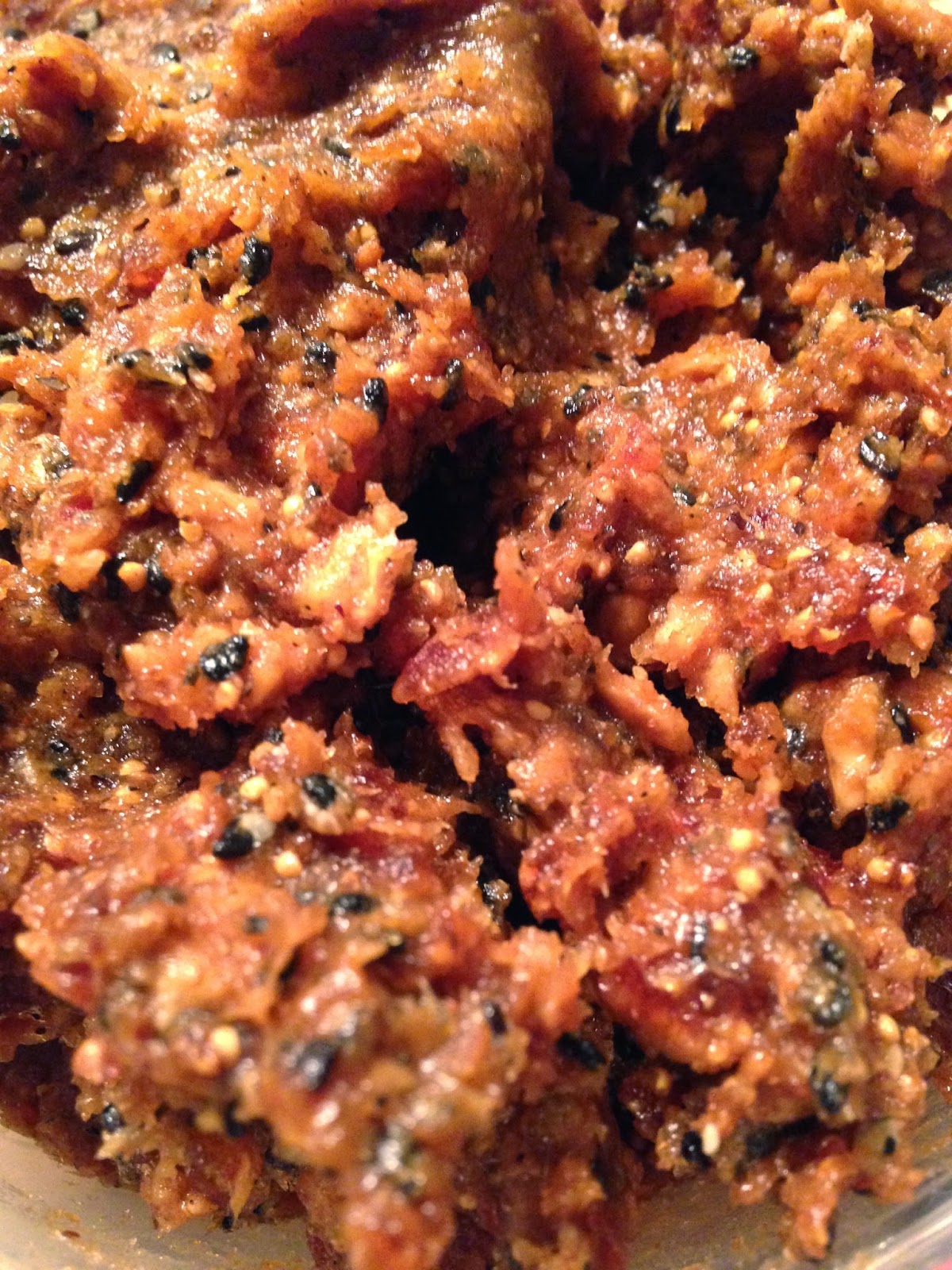
The Allure of Charoset


Charoset (or Haroset) is one of those obscure Jewish foods, prepared and eaten only once a year in Passover (mostly just during the Seder), and unlike the beloved Matzoh ball, it is hardly known to non-Jews. 

When I first saw it as a child I was neither particularly enticed by its appearance, nor seduced by the sounds of its name (which sounds like a disease). To make matters worse, it is eaten during the Seder wrapped in an odd looking "sandwich" along with horseradish (Hazeret in Hebrew) - which is also the name for mumps, not to mention a true tear-jerker and a traumatic experience for a child of any age *. 

The most common knowledge for the reason behind eating Charoset is it is representative of the mortar that our enslaved ancestors had to mix by the tonnes in Egypt. Other sages say that the Charoset is a remnant of the Paschal lamb - the sacrifice that commemorates the lamb that was slaughtered in each Jewish household in Egypt on the night of the tenth plague: the killing of the first-born. A bundle of hyssop was dipped in this poor lamb’s blood, and smeared on the door frames, as a sign for the Angel of Death to skip the Hebrew homes and spare the lives of our first-born. Hillel’s Sandwich (which I mentioned earlier) alludes to that symbolism of Charoset, as it represents eating the Paschal Lamb with the Matzoh and the Maror (bitter herbs), as directed in the Torah (Exodus 12:8).

Other sages and rabbis say that Cahroset needs to include all the fruit mentioned in Song of Songs (AKA Song of Solomon or Canticles). This poetic book signifies the unique relationship between God and his chosen people, which is read during Passover, the holiday that signifies the point in history as the birth of the Israelites as a nation. Among the fruit mentioned are apples, pomegranates, dates, figs and nuts. The spices added to the mixture (typically speaking: cinnamon and ginger) represent the pieces of straw that were added to strengthen the mortar. 

Now, Charoset greatly varies between different Ashkenazi and Sephardi Jews. Generally speaking, Ashkenazi Charoset is apple based (occasionally with pears added) and has a consistency of a dip or a spread; while Sephardi Charoset is more date-dominant, and often is formed into balls. And even within these two major ethnic groups, there are many different traditions and recipes vary greatly, for instance: Babylonian Charoset is made from Silan (date molasses) thickened with ground almonds, and I even came across a Moroccan recipe that is a paste of chestnuts, almonds and walnuts spiced with cinnamon and cloves; and some Ashkenazi recipes include raisins, while others use sugar as a sweetener; some call for pears in addition to the apples, and may use additional spices besides the cinnamon (i.e.: nutmeg, cloves, etc.). The Jews of Rome (and Italy) seem to have a balanced mixture of both, as you will soon see in the recipe I’ve received from my Italian sister in law, which was passed on to her from her great-great-grandmother, Nona Silvia Bassano from Livorno, Italy; yet surprisingly does not include any wine - an ingredient that so far has been consistently appeared in all the Charoset recipes I've researched. 

Some say that the use of fruit that brown overtime is the key for making a proper, mortar-looking Charoset. Hence using apples and pears without any lemon juice to avoid oxidation. The Jews of California have taken this one step further by making Charoset with bananas and avocados as well. I cringe to the idea of how this would look like the next day - kinda like leftovers of a smoothie, which I am sure is not a rare sight in raw-food-loving SoCal. 

I have to make a little confession: as much as I love my grandmother’s Ashkenazi Charoset, I was never able to replicate it satisfactorily in my own kitchen and have given up many years ago on trying it again. But someone asked me about Charoset and I got intrigued and looked it up in my library of cookbooks. Once I read about the Song of Songs reference to Charoset (in Phyllis and Miriyam Glazer’s “The Essential Book of Jewish Festival Cooking”), my imagination was immediately ignited, and I had to try both recipes in their book: a Yemeni Charoset and an Ashkenazi Charoset, that was very similar to my grandmother’s, except that it called for chopping the apples rather than grating them.


Ashkenazi Charoset
2 Granny Smith, Pink Lady or Gala Apples, peeled
1 cup walnuts
1/4 cup raisins, soaked in wine for 4-6hrs, or in boiled water for 15min, to soften
1 tsp raw sugar, brown sugar or palm sugar (or none if you are using sweet apples)
1/2 tsp Cinnamon powder
Pinch of freshly grated nutmeg
1-2 Tbs sweet wine

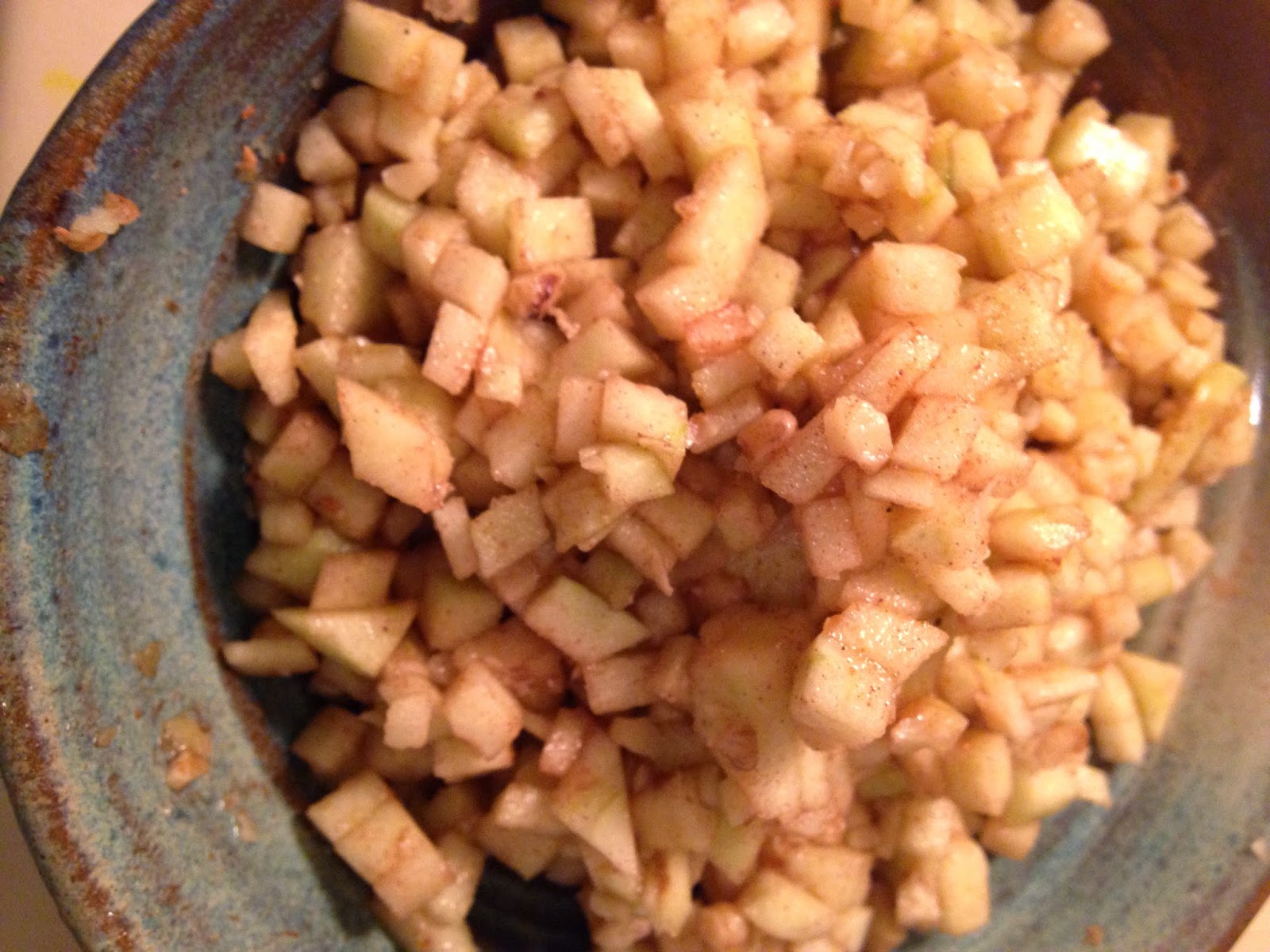
Chop the apples into tiny cubes (almost minced), or use the coarse side of a grater if you prefer a more watery consistency. Chop the soaked raisins. 
Finely mince the walnuts and add to the apples. Add the cinnamon and sugar. Keep refrigerated and use within 3-4 days. 
Can be enjoyed out of the Seder ceremony throughout the Passover week. I love it with Matzoh brei or on a potato kugel.  

Yemeni Charoset 
15 Dates, dried
15 Figs, dried
2-3 tsp Sesame Seeds, toasted **
1 tsp Cinnamon powder
1 Cardamom, freshly crushed with a mortar and pestle
1 Tbs fresh ginger root, grated
1oz dry red wine 
(adapted from Phyllis and Miriyam Glazer’s “The Essential Book of Jewish Festival Cooking”)

Nona Silvia Bassano of Livorno’s Italian Charoset 
1.5 kg Apples, finely grated
1 kg Dates, pitted and mashed
750 gr (3 cups) sugar 
300 gr Almond meal (from blanched almonds)
1 cup water
2-3 tsp Cinnamon powder ***

Boil the water and sugar to make a syrup. 
Add the almonds and continue cooking. 
Add the grated apples, and continue cooking, stirring constantly to prevent sticking to the bottom of the pot. If too watery - continue cooking for more reduction; if too dry, add a little more water. 
Add the cinnamon, and cook until the mixture starts bubbling and puffing. 

* If your parents are of the merciful type, they'll make this very sandwich with lettuce, which is a peculiarly delicious affair, and one of the significant flavours that makes this holiday forever memorable on every person's palate. 

** Optional - if you eat Kitniyot on Passover). I personally found their texture in this context to be annoying, as well as the fig seeds. Next time I am trying this with less figs, more dates and with tahini (sesame paste) instead! 

*** For a more Yemeni-style Charoset, you may add some ground cloves and cardamom, to taste.

Perfumes from the Orchard (Besamim me'ha'Bustan) + April Giveaway


Smadar picked this beautiful bouquet from her garden and orchard - an arrangement of seasonal fragrant flowers from trees, bushes and shrubs which were the inspiration for the evening titled Besamim me'ha'Bustan (Perfumes from the Orchard) and which took place on March 19th at the restaurant Smadar be'Clil in my home village in Israel's scenic Western Galilee.

It was both a pleasure and honour to co-host a night of perfume, desert and wine pairing with Smadar Yardeni of Smadar be'Clil and Yaniv from Lotem Winery. And the response form the guests and audience at the event has so much exceeded my hopes and expectations I am still feeling warm and fuzzy inside reminiscing about that beautiful night. The reason it took me so long to post about how it went can be attributed to traveller's wi-fi woes, as well as prolonged case of jet lag. But neither has diminished my memory from a most fine night spent with very lovely people, both on the hosting and the guest side.


Here's Smadar on the morning of the event, with the lavender & Earl Grey creme brûlée she's prepared in taste-size portions inside Turkish coffee cups. These were creamy and delicious, the caramelization process she did in the process of cooking the custard gives these brûlée a hint of honey.


Once I set the table with my mini-display (nothing too fancy, as it was all carried in my suitcase along everything else I needed for three weeks abroad) - it was time to taste the beautiful wines Yaniv brought with him from Lotem Winery. We selected three wines from Lotem for the pairing, plus one white wine from Kishor Winery: a lovely, citrusy-floral Savant Viognier, to go with the vegan malabi (based on coconut cream and flavoured with orange flower water). Note to self: an evening that starts with a glass of organic wine  can only be a happy one.


The event was structured as an olfactory and culinary symphony with 6 acts around 5 desserts that was inspired by seasonal ingredients, and was complemented by 6 perfumes, 4 wines and 2 teas. In each "section"  the guests experienced raw materials in their essential oil (or absolute) form, then smell them within a perfume, taste them in a dessert, and enjoy a complementary beverage (either tea or wine, or both).

We opened the evening with rose-tinged marzipans, handmade by Smadar, paired with fresh Charisma tea (loose leaf jasmine plus fresh herbs from Smadar's garden) and Vivace - Lotem's fine rose wine, which is extremely light and unusually on the dry side. I then spoke about two familiar yet fascinating ingredients: mint and almond, and let the guests smell essential oils of both, and also perfumes that are related to the subject: Charisma (which includes spearmint) and Hanami (inspired by cherry blossoms - which are not unlike the almond blossoms that were in bloom still last month).


Next came the fantastic creme brûlée I told you about earlier. Everything was beautifully served among sprigs of blooming lavender, and the individual Turkish coffee cups were a perfect size to serve such a decadent treat. I then let the guests smell essential oils of both lavender and bergamot and spoke about the connections these have via chemistry and their presence in the ever so popular Earl Grey tea. We smelled Lovender perfume at the end of this section.

The third part was spicy and warm, with vegan ginger mini muffins, studded with crystallized ginger inside, and served alongside dainty little teacups of piping hot soy milk chai. We smelled spice oils, with primary focus on ginger and cardamom (which are botanical relatives) and spoke about spices that are "warm" versus spices that are "cool". We also smelled Zangvil perfume, of course.


Now we took a little intermission from the desserts, and experienced Sonore - Lotem's bold Shiraz wine, accompanied our "tasting" of anything rosy: we experienced rose otto and absolute, as well as Cabaret perfume - a demonstration of rose and musk.  Yaniv explained about the origin of this grape, from Shiraz in Persia, which tied in beautifully to the origins of rose (Rosa centifolia or May Rose is native to Persia as well). I also tied it with the fondness of Muslims to musk and roses, and the symbolism of roses in Sufi poetry.


The highlight of the evening was one of the most beloved ingredients of all: orange blossom. We first experienced it in the vegan malabi (based in coconut cream) alongside the beautiful Savant Voigner from Kishor - which highlighted the citrusy notes, and even the petitgrain-like character of the orange flower water (something that my brother Yotam, who was among the guests in the event, pointed out).  We smelled different types of orange blossoms - orange flower water, orange flower absolute and neroli.


The grand finale was the chocolate mousse that was flavoured with orange blossom absolute and wild orange oil, topped with candied kumquat slices (from Smadar's orchard, of course). We paired this with the stunning Nebiolo, an aromatic yet light Italian varietal with floral characteristics and definite cassis flavours. And we concluded with smelling Zohar perfume - which went beautifully with all this luscious gorgeousness and the good mood that was already in the room went up even a few more notches.

I truly hope to create more events in the future with Smadar - it feels like this is just the beginning of a great friendship!

Last but not least, because this is the first day of April, it's time to announce this monthly giveaway: Leave a comment on this post, with your guess as to which flowers were in Smadar's beautiful bouquet - and enter to win a mini of Cabaret!

Perfumes from the Orchard (Besamim me'ha'Bustan) + April Giveaway


Smadar picked this beautiful bouquet from her garden and orchard - an arrangement of seasonal fragrant flowers from trees, bushes and shrubs which were the inspiration for the evening titled Besamim me'ha'Bustan (Perfumes from the Orchard) and which took place on March 19th at the restaurant Smadar be'Clil in my home village in Israel's scenic Western Galilee.

It was both a pleasure and honour to co-host a night of perfume, desert and wine pairing with Smadar Yardeni of Smadar be'Clil and Yaniv from Lotem Winery. And the response form the guests and audience at the event has so much exceeded my hopes and expectations I am still feeling warm and fuzzy inside reminiscing about that beautiful night. The reason it took me so long to post about how it went can be attributed to traveller's wi-fi woes, as well as prolonged case of jet lag. But neither has diminished my memory from a most fine night spent with very lovely people, both on the hosting and the guest side.


Here's Smadar on the morning of the event, with the lavender & Earl Grey creme brûlée she's prepared in taste-size portions inside Turkish coffee cups. These were creamy and delicious, the caramelization process she did in the process of cooking the custard gives these brûlée a hint of honey.


Once I set the table with my mini-display (nothing too fancy, as it was all carried in my suitcase along everything else I needed for three weeks abroad) - it was time to taste the beautiful wines Yaniv brought with him from Lotem Winery. We selected three wines from Lotem for the pairing, plus one white wine from Kishor Winery: a lovely, citrusy-floral Savant Viognier, to go with the vegan malabi (based on coconut cream and flavoured with orange flower water). Note to self: an evening that starts with a glass of organic wine  can only be a happy one.


The event was structured as an olfactory and culinary symphony with 6 acts around 5 desserts that was inspired by seasonal ingredients, and was complemented by 6 perfumes, 4 wines and 2 teas. In each "section"  the guests experienced raw materials in their essential oil (or absolute) form, then smell them within a perfume, taste them in a dessert, and enjoy a complementary beverage (either tea or wine, or both).

We opened the evening with rose-tinged marzipans, handmade by Smadar, paired with fresh Charisma tea (loose leaf jasmine plus fresh herbs from Smadar's garden) and Vivace - Lotem's fine rose wine, which is extremely light and unusually on the dry side. I then spoke about two familiar yet fascinating ingredients: mint and almond, and let the guests smell essential oils of both, and also perfumes that are related to the subject: Charisma (which includes spearmint) and Hanami (inspired by cherry blossoms - which are not unlike the almond blossoms that were in bloom still last month).


Next came the fantastic creme brûlée I told you about earlier. Everything was beautifully served among sprigs of blooming lavender, and the individual Turkish coffee cups were a perfect size to serve such a decadent treat. I then let the guests smell essential oils of both lavender and bergamot and spoke about the connections these have via chemistry and their presence in the ever so popular Earl Grey tea. We smelled Lovender perfume at the end of this section.

The third part was spicy and warm, with vegan ginger mini muffins, studded with crystallized ginger inside, and served alongside dainty little teacups of piping hot soy milk chai. We smelled spice oils, with primary focus on ginger and cardamom (which are botanical relatives) and spoke about spices that are "warm" versus spices that are "cool". We also smelled Zangvil perfume, of course.


Now we took a little intermission from the desserts, and experienced Sonore - Lotem's bold Shiraz wine, accompanied our "tasting" of anything rosy: we experienced rose otto and absolute, as well as Cabaret perfume - a demonstration of rose and musk.  Yaniv explained about the origin of this grape, from Shiraz in Persia, which tied in beautifully to the origins of rose (Rosa centifolia or May Rose is native to Persia as well). I also tied it with the fondness of Muslims to musk and roses, and the symbolism of roses in Sufi poetry.


The highlight of the evening was one of the most beloved ingredients of all: orange blossom. We first experienced it in the vegan malabi (based in coconut cream) alongside the beautiful Savant Voigner from Kishor - which highlighted the citrusy notes, and even the petitgrain-like character of the orange flower water (something that my brother Yotam, who was among the guests in the event, pointed out).  We smelled different types of orange blossoms - orange flower water, orange flower absolute and neroli.


The grand finale was the chocolate mousse that was flavoured with orange blossom absolute and wild orange oil, topped with candied kumquat slices (from Smadar's orchard, of course). We paired this with the stunning Nebiolo, an aromatic yet light Italian varietal with floral characteristics and definite cassis flavours. And we concluded with smelling Zohar perfume - which went beautifully with all this luscious gorgeousness and the good mood that was already in the room went up even a few more notches.

I truly hope to create more events in the future with Smadar - it feels like this is just the beginning of a great friendship!

Last but not least, because this is the first day of April, it's time to announce this monthly giveaway: Leave a comment on this post, with your guess as to which flowers were in Smadar's beautiful bouquet - and enter to win a mini of Cabaret!

Citrus Week (May 4-8)


There are four more spaces remaining for Citrus Week (May 4-8).
This is a week long course at my Vancouver studio, suitable for all levels. It focuses on the basic lab skills (tincturing, dilutions, measuring, weighing, recording) through studying the earliest form of European/Western perfumes: Aqua Mirabillis AKA Eaux de Colognes. You'll really enjoy discovering historic formulae, as well as learning about the unique properties of the citrus oils in body care and cleaning products (functional perfumery), learn a bit about organic chemistry, and - the biggest challenge of all: learn to discern between the sutble nuances that differentiate the many varieties of citrus oils, i.e. red mandarin vs. yellow mandarin; grapefruit vs. bergamot; lemon vs. lime; sweet orange vs. bitter orange.

Featured Lecture: The Role of Citrus in Functional Fragrances

Featured (Practical) Workshop: Tincturing citrus zest and citrus leaves

Dates and Structure:
The course runs May 4-8, which is a full week - Monday through Friday from 9:30am to 4pm and takes place at Ayala Moriel's private home studio.
The mornings (9:30am-12pm) are dedicated to theory and studying olfaction (discerning between notes). The afternoons (1pm-4pm) are a lab session which is dedicated to the practical implementations of what was studied in the morning, i.e. weighing, measuring, recording, formulation, composition and compounding.
Back to the top