s

SmellyBlog

Practice

Practicing for the recital

“The master has failed more times than the beginner has even tried.”- Stephen McCranie 

Glancing at the dictionary definitions of the word "Practice" is quite insightful. Practice isn't merely a preparation, rehearsal for the "real thing". Practice IS the real thing. You've got to "practice what you preach" and only by repetition of your skill (practicing it, over and over again), will you be able to actively pursue a profession, and "practice" it or open your "practice".

Dr. Clarissa Pinkola Estés talks about practice in her book "The Creative Fire: Myths and Stories on the Cycles of Creativity". She reveals to the readers the dirty secret of many creative people: she has written thousands  upon thousands of pages of stories, poems, thoughts, etc. Out of those, many should never be read by a living person. They are that horrible. But it is through those pages, that an artist practices her skills - sharpens her pencil, so to speak - and every so often, is able to create a gem - a story that will be told and retold a hundred times, published and read many more.

These reflections on creativity brought me to think about my own craft. It is one of the hardest thing to teach, yet twice a year students from all over the place gather at my studio for a week, and try their hands at the art of perfumery. I have witnessed countless blending sessions in which students got easily frustrated, or were even angry at themselves for producing something "disgusting" (although I have a  strict rule about not using such strong words in those sessions, they sometimes just come out of their mouths) or making a tiny mistake that they worried will never be fixed. As I accompany them on those little expeditions of perfume making, I can't help but remember my moments of frustration at the bench. Too much of this, or too little of that. Being hang-up on a concept or a vision, and not following what I smell. So what if the starting point was ingredient X, and now you're inclined to abandon it altogether for another exciting combination that popped along the way? This is all part of practice, part of learning - which eventually will create something beautiful that you'd like to dab on any other person on the street.

In the past couple of years, I've been immersed more deeply in the practice of movement - namely Pilates and Middle Eastern dance - both requiring hours of practice. Exercising the muscles and learning the choreography or the movements is only a small part of it. Feeling, sensing, experiencing the moves, the dance and the breath - that's the core of "practice" and of the art itself. I recalled the hours spent at the piano, going over and over a single bar in a  particular movement in a Beethoven sonata. Re-connecting with the emotions that this particular part brings; re-experieincing the sensations of the tips of my fingers on the keyboard. This takes time, which of course we eventually run out of; but it's also part of the art - whether of not there is an audience to it. The practice it not just the concert or the dance performance. It's the actual dancing, playing or singing, wherever and whenever it takes place. And thankfully int these art forms - you don't run out of materials, just grow old with them...

Which brings me to another quote by a famous cartoonist: "Creativity is allowing yourself to make mistakes. Art is knowing which ones to keep"(Scott Adams).  For creativity to happen, one needs time, practice and a nurturing, non-judgemental environment. To produce art, all of this needs to happen as well; but then also have the editor's eye that will select which of those bursts of creativity will have a lasting meaning in the context of that particular piece of art. Which ones are relevant, which ones flow and tell a story - and which ones are best left out, either because they reveal more than needed to the story; or perhaps they belong to another.

It's a very similar process with perfume-creation, and like any creative process - it takes time, energy, work, and also will eat up materials of varying costs. You'll have to produce dozens of unacceptable stench, mediocre concoctions, and some that are perhaps great as an expression of your emotions but not really fit to expose other noses to. And there is a certain amount of cultivation that needs to take place - preparing the soil so to speak, for the creation to emerge. This can sometime take a few years, or even a lifetime (as is evident in the life story of Mrs. Mary Delaney, who created a new art form (mixed-media collages) and a massive body of work at the ripe age of 72, which is beautifully interpreted in Molly Peacock's book "The Paper Garden".

Cured: The Science & Art of Decay

Orris Root

The challenge of some raw materials is that they might be rather unpleasant in their original state. At best, they lack any aroma and depth whatsoever. The cure for that lies in a process called curing (pun intended). Curing takes many shapes and forms. Sometimes the process is long and at times it's rather short. Either way, the results are nothing short of magic that tantalizes the palate and the olfactory bulbs!

We've all heard of curing meats and tobacco leaves, and it's common knowledge that wine gets better with age. But the culinary world is not the only one that benefits from time and fermentation. For some fragrant crops, growing and harvesting them is only a tiny portion of the process to make them edible, smellable or worth any mention at all. The starting material may be extremely stinky, bitter, astringent, or just plain flavourless at best. The processes by which the desired result is achieved is usually referred to as "curing" or "aging". It ranges from a few days, weeks or months and up to several years. The extra time and care that is invested in those crops makes all the difference in the world. And this will be evident and felt in the raw material itself as well as the finished product where it will be used - in our case, perfume.

Several aromatic botanicals used in perfumery require a fair amount of processing before being used (or extracted). For example: vanilla beans must be left in the sun to cure to bring out the vanillin; patchouli leaves must be dried and matured for quite some time to improve their scent; and iris rhizomes must be peeled, dried and stored for 3 years before they are extracted to produce orris butter.  Let's explore some of these unusual raw materials in more detail, as they specifically relate to the world of perfume and aromatics:
Oakmoss

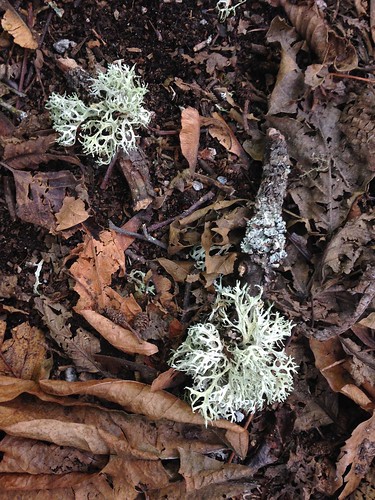
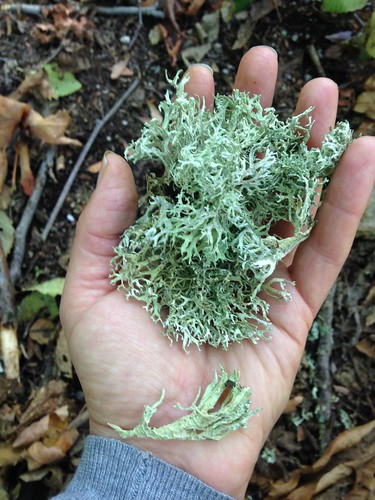
Oakmoss (Evernia prunastri) actually is a lichen native to former Yugoslavia, and which also grows in the rainforests of the Pacific Northwest. You may know it under the name Antlered Perfum; however, it is practically odourless when found fallen on the forest floor. Once placed in hot alcohol, and undergoes a process of extraction - a fragrance that personifies the aroma of the forest floor's dark and mysterious hidden life emerges - fungi, decay, moss and undergrowth. No wonder Chypre, the most beloved fragrance family that relies on oakmoss, is strongly associated with fall.
Perfumes that give oakmoss its proper due are far and few - so reach out for vintage of Miss Dior,  Vol de Nuit or Chamade; or check out some of my Chypre (and Fougère) fragrances, namely Ayalitta, Megumi, Rainforest and Autumn.
Chawan with Matcha

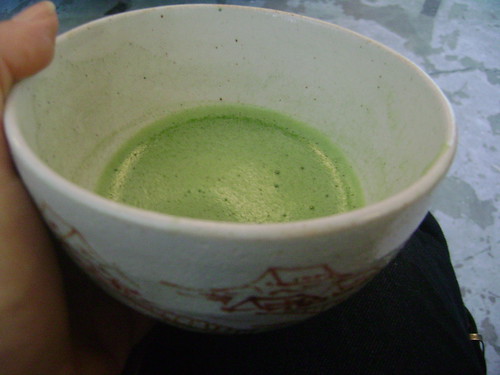
Tea is so unusually diverse - there are white, yellow, green, blue (AKA oolong), red and black teas - that it's hard to believe it comes from only one plant: Camellia sinensis. It is the process of  curing - namely, oxidation, fermentation, roasting, and sometimes even smoking, that creates the unique effects of texture, aroma and nuanced flavours in tea. Some teas are even left to age for decades and up to a hundred years!
Tea leaves come in all sizes, shapes and forms, at times they are twisted to break the cells and release the enzymes that will start the oxidation process (as in oolong teas), other times they are rolled into little balls (dragon pearls or jasmine pearls), hand-tied to look like a flower that will open its "petals" once steeped in water, to reveal a colourful real flower in the heart, and many other ancient traditions involving teas. In perfume, we use tea notes rarely, because they are so subtle. The first "tea" perfume was Bulgari's Au Parfumeé au Thé Vert (which utilized ionone in conjunction with hedione to create the effect of freshly steeped green tea) and the series continued to even include a "red tea" scent based on rooibos (not from the tea plant).  But my favourite is, not surprisingly, the Bulgari Black, which is based on Lapsang Suchong (pine-smoked tea), and even more so - l'Artisan Parfumeur's Tea for Two, which is a more refined play on the same tea leaf. If you're a tea love, taste a sip of Kinmokusei, our osmanthus-scented tea with hints of tobacco, Gaucho (with the tannin South American Maté) or The Purple Dress (black tea).
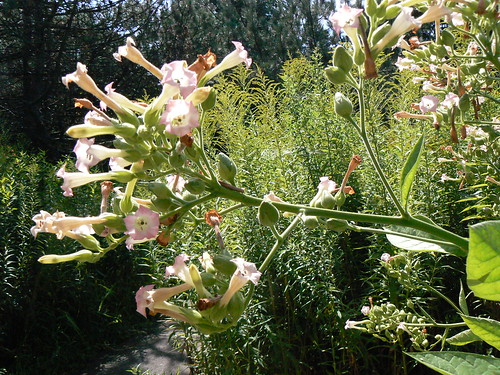

Tobacco Flowers

Few other ingredients stir the imagination as much as tobacco. The raw leaves have a bitter taste and not a particularly pleasant smell either. After all, nicotine, the substance that gives tobacco most of its medicinal (and addictive) properties, is meant to protects it from insects. Although the raw leaves have medicinal uses, it is hardly the sophisticated aromatic that we have learned to recognize as tobacco. This is achieved via a careful drying process that takes several days to a week, and usually followed by an additional fermentation period of about 8 weeks. This will develop the characteristic tannin,  full-bodied chocolate-vanilla undertones and hints of coumarin, violet and tea notes in tobacco products that some of us are so fond of (or hooked on). Additionally, tobacco leaves are treated with various perfume and flavour materials to enhance and accentuate this character. If you like your tobacco leaf clean and dry - try Sabotage  The tobacco in or Rebellius is exotic and spicy-sweet, not unlike shisha,  To experience pipe tobacco or Cuban cigar in all their glory, dab some Espionage.
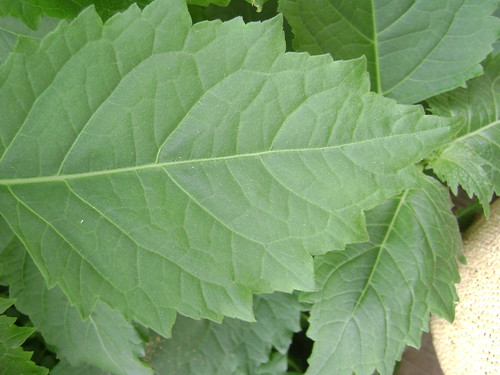
Patchouli Leaves

Patchouli leaves, an odd member of the mint family, do not smell like much when they're green and fresh. The sun-dried leaves are ideally stacked and occasionally turned in a process of interrupted fermentation. This way they will yield 2.5-3 times more oil than the green leaves. This process helps to rupture the cell walls and release the oil. However, that is not sufficient to develop their charactesritic aroma of patchouli. Exceptional patchouli oils undergo an additional step of aging, in which all the off notes (grassy, oily, tar-like) dissipate and make room for rounded, warm precious-wood aroma that you'll find in fine quality patchoulis - which can take another 1-4 years. Patchouli really does get better with age, and when this desired effect is achieve - the scent will remind one of both dark red wine, oak barrels and the cellar where it is kept. Patchouli is earthy, woody, musky, a tad funky, spicy and dark-chocolate-like. Examples of this can be found in  Patchouli Magique and Patchouli AntiqueFilm NoirRazala, and Palas Atena (Ayala Moriel).

Ambergris

Ambergris is a rare secretion that occurs in about 1% of sperm whales to heal their stomach from the scratches of the cuttlefish they swallow. This sticky mass floats on the ocean, and by exposure to the sun and the salty water it changes its originally foul smell into one of the most delicate and sought after fragrances: Ambergris. Ambergris is sweet, soft and slightly powdery. We use ambergris only occasionally – when we can find ethically harvested ambergris that was beach harvested. It is than tinctured and used as a base note in oriental and floral compositions. Best scents to experience this though are LesNez' mystical l'Antimatiere  by Isabelle Doyen; and my own Orcas, Etrog and Razala.
IMG_8605

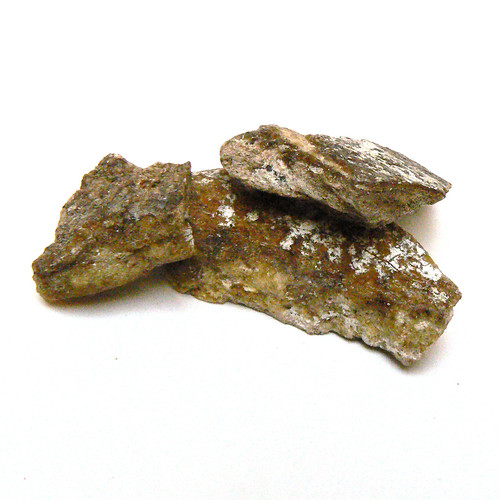
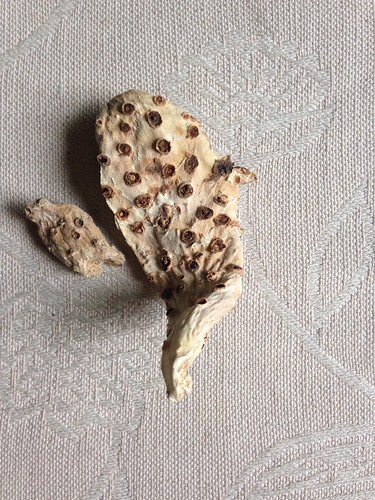
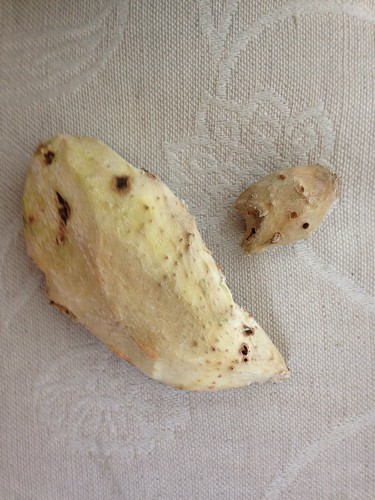
Orris Root: Orris root essential oil (AKA Orris Butter) is one of the most precious perfume materials. The roots need to be peeled and aged for three years before extraction or distillation. During this time, the glucosides in the rhizome gradually metabolize into irone - the violet-like molecule that gives orris root its desired violet-blossom aroma. It is invaluable in perfumery for its delicate powdery delicate aroma and ability to fix lighter scents. Orris is a welcome addition to any perfume whenever a delicate softness is required. Orris butter is both powdery, milky and smooth - reminiscent of a baby’s head and soft skin. Experience the highest quality of orris, with 15% irone (the unique orris molecule) in Sahleb parfum. For a lighter, paper-thin iris, try Hiris, and for a more sophisticated, abstract, modern yet old-fashioned you must experience Après l'Ondée!
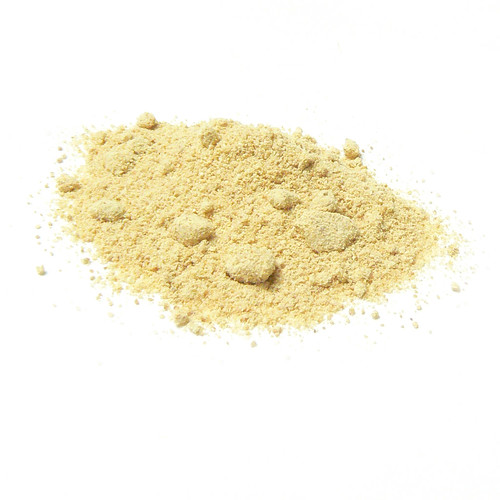
Iris (Iris pallida)

Coumarin has may sources, and in all of them, it is not felt all that much in the original product but only appears after a process of drying or curing takes place. Tonka is soaked in rum and then dried, to coax the coumarin crystals out of the "beans". Liatrix (deer's tongue) smells like nothing when it's fresh, and like hay - needs to be dried and even slightly fermented to bring out the coumarin potential locked within them, which smells like "new mown hay". Classic coumarin examples are YerbamateBiche Dans l'Absinthe. and Brut. To experience natural coumarin try l'Herbe Rouge, Sabotage or White Potion.
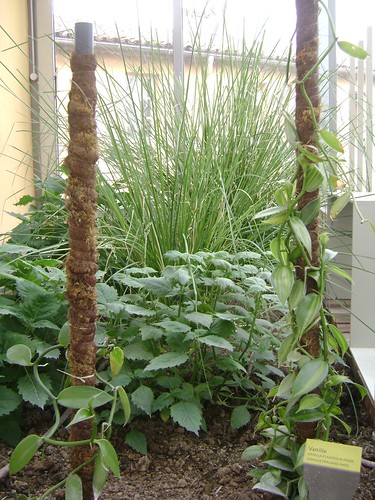
Climbing Vanilla Orchids, Patchouli and Vetiver

Vanilla Beans are left to cure in the sun so that they turn from green to black and develop their vanillin content. But vanillin is only one component that makes vanilla so special. In reality, this is one of the most compelling and complex natural aroma, inimitable by any manmade compounds.  Some 100 molecules were identified in vanilla (Vanilla planifolia), in addition to vanillin (4-hydroxy-3-methoxybenzaldehyde), including: Guaicol, creosol, acetovanillone, vanillyl alcohol and methyl salicylate and vitispiranes.
Tahitian vanilla (Vanilla tahitensis) has a much lower content of vanillin, and has a scent reminiscent of heliotropin - but contrary to some literature, this is not a compound that naturally occurs in it. Rather, it's the anisyl compounds that are responsible for its soft, floral, almond-like, sweet heliotrope-like nuances, including anisyl alcohol, anisaldehyde, dianisyl ether and anisyl ethyl ether. (Bo Jensen). To experience true vanilla absolute in perfume, try Shalimar (the extrait has handcrafted vanilla tincture), My Vanilla (Anna Zworykina),  Vanille Galante (Hermessences), Espionage and Immortelle l'Amour (the latter has 5 types of vanilla, including absolute, CO2 and handmade tinctures by yours truly).


Perfume Naming Contest + Informal Poll

Forest Floor

Thank you for all of you who've taken the time and shared your thoughts with me on the perfume name. It smells like the magic that occurs in a sunny spot in the rainforest on a warm day late in the summer and early in the fall, which is unique to the Pacific Northwest. Everyone who sent their suggestions will be sent a sample of the perfume shortly (please email me with your mailing address so that I can accomplish my part of the deal). I'm still deciding between a few options that were shortlisted: The four names that most resonated with me are Komorebi (thanks, Avraham Yehoshua!), Cathedral Grove (Thank you, Joanna Garfinkel!), Dappled Gold, and Pacific Spirit. Please take a moment to vote in this poll (or respond in the comment sections to the informal poll below) and enable me to share this creation with you  in the most appropriate season for it - now!

Informal poll: Ayala Moriel Parfums is about to release a new perfume that captures the wonderful scent that can be experienced this time of year in the Pacific northwest rainforests: It emanates from the sun-dappeled fragrant forest floor on those warm days when the sun brings out the sweet smells of redcedar, moss & Douglas fir…
What would be the best name for this perfume, among the following:

1. Komorebi *
2. Cathedral Grove **
3. Dappled Gold ***
4. Pacific Spirit ****

*The Japanese word for "Sun filtering through foliage"
** Ancient growth forest with giant redcedars and hemlock spruces on Vancouver Island
*** Alluding to the golden interplay of light on the forest floor (which is also part of the Komorebi phenomenon)
**** Forest in Vancouver's Westside, near UBC

Study in Cedar

Study in Cedar

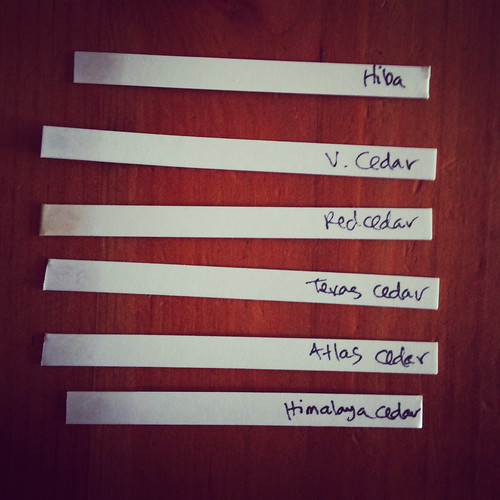
A study in cedars reveals the many nuances and variations on a beloved woody theme. While all of them have cedrol as a main constituent*, they smell quite different from one another. First of all, there is a pattern here: true cedars (Cedrus) smell significantly different from the so-called cedars (Thuja, Juniperus, etc.). Let's begin with those:

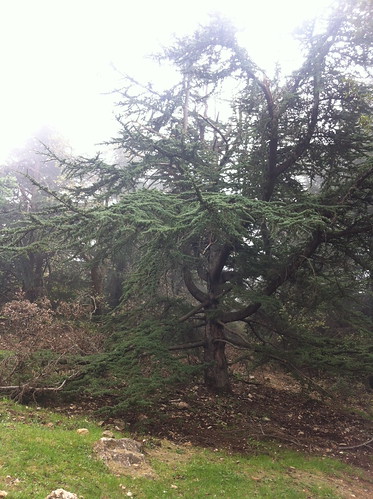
Atlas Cedar (Cedrus atlantica) is a large fragrant tree that grows on the Atlas mountains and looks exactly like Cedar of Lebanon (Cedrus libani). Atlas cedar has been in use for thousands of years, both as a medicine, cosmetics, incense and perfume. In Egypt it was used to embalm the dead. It is considered one of the earliest incense materials.
The oil is a semi-viscous, clear-yellow liquid with a fine, warm, polished-wood scent. There is a sweetness to it, almost like honey - but also a certain cool element as well, or just an overall feeling of smoothness of a cold pebble. Then there is also a certain animals aspect, not as urine-associated as in sandalwood, but pretty close. It's a very light, subtle base note with mild fixative qualities. It functions in perfume similarly to frankincense - a base note that is very light and non overpowering. It's easy for it to get lost in a composition, so either use large amounts or use only with other lighter notes (such as light florals), and if you're using heavier notes, make sure they are delicately proportioned.

Principal constituents of Atlas Cedar oil (according to Julia Lawless' Encyclopedia of Essential Oils):
Atlantone, cedrol, caryophyllene, cadinene and others.

Himalayan Cedar (Cedrus deodara) are descendents of the Cedar of Lebanon (Cedrus libani). I can't identify any differences between Himalayan and Atlas cedar. Maybe, but just maybe, it is a tiny bit lighter and cooler.
Cedar of Lebanon

True cedarwood is a very versatile note and blends well with most notes. Try it with other woody notes to create a woody base not for a composition (i.e.: other types of cedar, sandalwood, agarwood, vetiver, muhuhu, West Indian Sandalwood, etc.). It is wonderful with citrus oils (lime in particular), spice oils (cardamom, coriander, ginger) and floral notes (jasemine, rose, tuberose).

In aromatherapy, both true cedarwood oils are the safest to use. They are valued for grounding and entering; Antiseptic; For treatment of oily hair and skin as well as acne, to treat insect bites. True cedarwood oil is astringent, expectorant, and helps to relieve stress. It is best avoided during pregnancy.

Recipe: Aphrodisiac Atlas Mountains Massage Oil
30ml Almond oil (2 Tbs.)
10 drops Atlas Cedarwood
10 drops Sandalwood oil
2 drops Ylang Ylang oil
2 drop Cardamom oil

Virginia cedarwood (Juniperus virginiana) is really the oil from the heartwood of a North American juniper tree. It's not a very tall tree and is slow to grow. There are two subtypes with slightly different habitat, that vary in their size cones, shape of leaves and bark colour: Juniperus virginana var. virginiana, AKA Eastern Redcedar, has larger cones and a red-brown bark. It grows in the eastern parts of North America - west from southern Ontario and South Dakota, all the way down to the northern parts of Florida and the post-oak savannah of Texas. The other type, Juniperus virginiana var. silicicola AKA Southern Redcedar or Sand Juniper, which has smaller cones and orange-brown bark. It grows along the Atlantic gulf coast from North Carolina to Florida and Texas. 
The oil from the heartwood of Virginia cedarwood can be either distilled once, producing a dark amber/brown oil, or rectified to produce an almost transparent white oil. Either way, it has the beloved and familiar scent of pencil shavings, woodworking workshops, old furnitures, museums, cedar chest or bentwood box and hamster cages, with a smoky topnote that develops into an almost creamy, precious wood note (not that far removed from sandalwood, even if it is overall much drier and not as creamy) before it evaporates completely. It is a rather fleeting top note, lasting only a day or two on a scent strip. You'll need another long lasting woody note like sandalwood, vetiver or patchouli to fix it and give it a more lasting power.

Principal constituents of Atlas Cedar oil (according to Julia Lawless' Encyclopedia of Essential Oils): 
Cedrene (up to 80%), cordial (3-14%), cedrenol, and others. 

Texas cedarwood (Juniperus mexicana) is intense, smoky, dry-woody, warm and smooth. Reminiscent of an old cedar wood chest and campfires. The non-rectified Texas Cedarwood essential oil is dark amber, and contains solid crystals that can be filtered out. My guess is, that if they were to actually be left in the oil, it will be a longer lasting product. It lasts longer than the Virginia cedar wood, but is still a fleeting top note.

Principal constituents of Atlas Cedar oil (according to Julia Lawless' Encyclopedia of Essential Oils): 
Cedrene, cedrol (in higher percentage than the Virginian cedarwood oil), thujopsene, sabinene and more. 

400 Years Old?

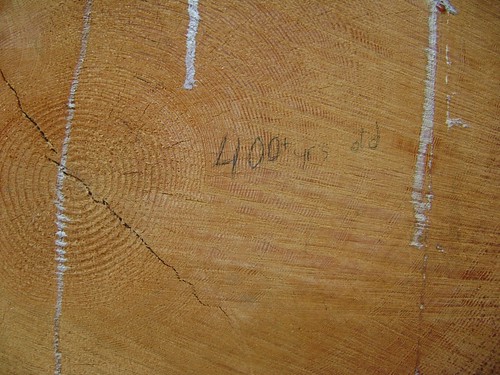
Redcedar (Thuja plicata) AKA Western Redcedar, has the most potent smell of all cedars: Smoky, medicinal-herbacouse, and almost repulsive, actually, as an essential oil. I've already talked much about how it was the pillar upon which the entire Coast Salish culture was dependent upon for their survival. And even though very few live by those traditions now - it is still a symbol of the West Coast, and smells like so many mundane and nostalgic things here: Playgrounds are padded with it, as are horses arenas - and to me the latter is a strong, positive scent memory of the redcedar mingled with the musky smell of horses (and their manner). Redcedar is what most fences, roofs and outer parts of woodens houses are made of as well. So wherever there's fresh wood here, it's usually redcedar. And that includes a bundle of chopped wood for the fireplace or when you go out camping. A new (and fond) scent memory for me is the smoky bonfires on Chesterman Beach, that the surfers burn to warm their bones after a chilly afternoon of wave-chasing. Imagine that mingled with a pungent low-tide aroma of barnacles, rotting seaweed and mussels, and you may not even need to travel there at all (though I highly recommend that you do!). Of all the cedars, this is the most intense and tenacious - I'd consider it a heart note. As a raw material it is still new to me, so I'll have to find out more about its fixative qualities etc. I am certain a light hand is recommended with this oil. That was the only way I made it work so far - used lightly, and in conjunction with other very strong notes. 

Hiba (Thujopsis dolabrata), is a Japanese cedar, AKA Hiba Arborvitae or False Arborvitae. It has the characteristic smoky sawdust opening, which is reminiscent of most so-called cedars (Redcedar, Virginia and Texas cedarwoods). It has a distinctive cool, camphoreous character as well. Smellyblog reader Cathryn Walter has informed me that it is used as an antibacterial and anti-fungal oil in aromatherapy, and she swears by it for chasing away colds. Drug-resistant bacteria may not withstand hiba, and it is also used to repeal insects and for treating skin conditions (I imagine similar to the other cedarwood-type oils: against dundruff.

Caution: All cedarwood oils, true or otherwise, are best avoided during pregnancy, due to their abortificant actions (can cause a miscarriage).  

* Cedrol can be found in many oils that have a hint of a woody elements - such as cypress, hinoki, juniper, cascarilla bark, calamus, and even in some herbs and spices such as angelica, ginger, basil, sage and wormwood.
Back to the top