s

SmellyBlog

Lovender Soap

Lovender Soap

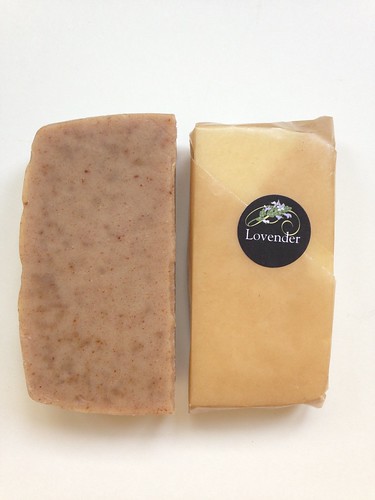
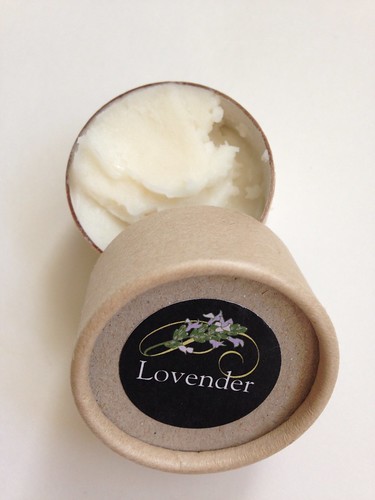
Summer is preferably the time when I am busy in the lab planning the upcoming winter holiday season - and the most fun part of it is R&D for new products. One of those you've read about yesterday (Lovender deodorant).  Today I'm sharing with you the Lovender soap which I've created with Schuyler Corry of Open Source Soap. That is to say: I've created the scent, and he incorporated it into one of his wonderful, tried-and-true soap formulae.

With soaps, it's rarely possible to use the same formula as was created for the perfume, simply because of the costs. You need a whack load of raw materials to make a batch of soap, even if it is just at about 2% concentration. Lovender perfume included precious botanicals such as sandalwood oil (almost extinct at our day and age), vanilla absolute  (whose prices doubled this year due to low yield) and orris butter (one of the world's costliest raw materials, due to the fact that it takes 3 years to obtain the finished product from planting through meticulous processing and aging to extraction). To make up for their absence, I've used amyris oil (AKA West Indian sandalwood), a combination of other vanilla-smelling resins and balsams, and orris powder instead of the orris butter.
Lovender Soap

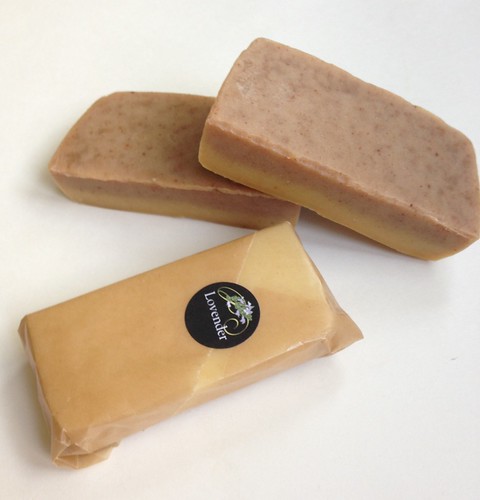
Using botanicals in soaps is always bound to produce surprises. For example: the bottom layer of the batch looked like it had two layers of colours. The lighter one at the bottom didn't have any of the orris powder in it at all. The orris gives it a gentle exfoliation, by the way. Also, despite the fact that it is with the same moisurizing formulae like we always had, this leaves my skin feeling cleaner but also a tad drier. Not so bad that I needed a moisturizer though. But it was noticeable.

I also wanted to create a somewhat tonka-bean like, foody effect by utilizing a brand new essence on my palette: bitter almond oil. This raw material is practically pure benzaldehyde. I had no idea how it would react to the saponification process, and I also didn't know how it will play out with the lavender essences. I smelled bitter almond in soaps before, and it was quite prominent, which was a hint to me that it would probably work. I was hoping it would also help to make up for the absence of vanilla absolute and also create an original combination. Turns out it worked quite lovely with the coumarin aspect of the lavender absolute. So it truly accentuates it. I may want to work more on this formulation for the next batch (we only make 14 soap bars in each batch, so that gives a bit of fiddle room and also makes mistakes not as grave as they could be). So I will likely fiddle with both the fragrance formula and also try it again with and without the orris root powder, just to see and smell what it would be like.
Lavender Deodorant

Lavender Deodorant

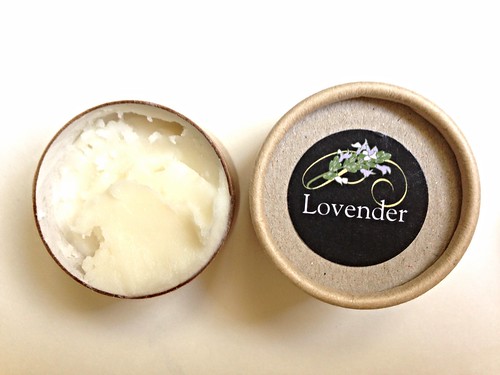
Making your own deodorant is easier than a pie. And as skeptic as I may have been - it's also results in a very effective product. I tried this one when teaching two back-to-pack Pilates classes, and was absolutely sure my armpits will overcome the superficial layer of essential oils. But I was proven wrong. I use this now all the time, and am almost out of the 4 little jars I made; so figure once I dig out my recipe, why not share it on SmellyBlog?

It's especially relevant now, because: a) it's summer; b) it's a hot summer; and c) lavender, who is getting plenty of attention this month on SmellyBlog, is one of the best natural deodorants out there!

But lavender is not the only essential oil that will help your armpits smell nice and fresh throughout the dog days of summer; here's a list of oils that can be used individually - or better yet, synergistically. When you combine two or more oils that have the same properties, not only will they smell nice; their action and effectiveness will also be amplified.

Deodorizing oils:
Allspice
Basil
Bay Leaf
Calendula
Clary Sage
Coriander
Cypress
Eucalyptus
Frankincense
Grapefruit
Jasmine
Hops
Lavender
Lemon
Lime
Lovage
Myrrh
Patchouli
Peppermint
Rosemary
Sage
Sandalwood
Orange, Sweet
Tea Tree Oil
Vetiver

The following recipe is for a cream deodorant - you will need to use your finger to apply it. It's a bit awkward if you're used to stick deodorants, but totally worth it if you've nailed down a scent that you really love, not to mention it works really well and costs very little compared to the fancy deodorants you'll find in the health food stores (some of which are not only expensive, but also rather useless).

The key active ingredients here are the baking soda and the oils. Baking soda absorbs odours and will keep the armpit scent away. The essential oils neutralize the activity of bacteria (they are most antiseptic oils, so they stop the action of the bacteria that produces armpit sweat odour). The starch's role is to absorb the sweat and also it helps with the consistency of the cream, making it less runny (which is particularly an issue on hot summer days - which is when you need your deodorant the most!).
The coconut oil is non-comedogenic, and its role is to carry all the active ingredients. The butter's role is to bring it to a more solid state at room temperature. I'm still experimenting with other butters and waxes to formulate a stick-deodorant and researching what to put in a spray deodorant. As you can tell, I'm my lab' most eager test bunny.

Lovender deodorant

DIY Deodorant 
3 Tbs virgin coconut oil
2 Tbs shea butter or cocoa butter 
3 Tbs baking powder 
2 Tbs powdered starch (I used arrowroot in lieu of corn starch) 
25-50 gtts (drops) of lavender oil, or any combination of deodorizing essential oils of your choice (see list above), or use the following combination, which totals 50 drops:

"No Sweat" - Ayala's Deodorant Scent:
20 gtts lavender essential oil
10 gtts geranium essential oil
2 gtts myrrh essential oil
5 gtts patchouli essential oil 
3 gtts vetiver essential oil

Directions: 
- Measure the oil and butter, and warm up gently over a bain-marie, until just melted.
- Remove from the heat
- Stir in the baking soda and starch, until completely incorporated
- Add the essential oils drop by drop, stirring well between additions
- Pour into clean, sterilized jars, and close the lid
- Refrigerate until set (this is especially important in the summer - otherwise you'll end up with a runny paste that never quite settles down).

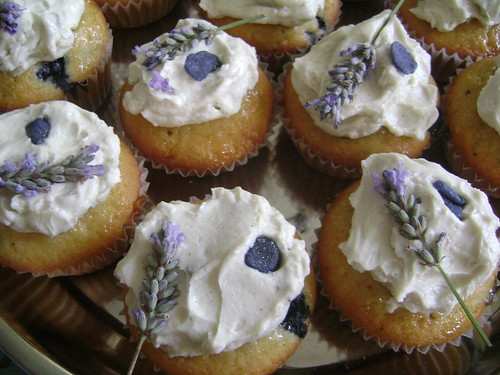
Lavender-Violet-Cassis Cupcakes

Lavender, Blueberry & Violet Cupcakes

Lavender-Violet-Cassis Cupcakes were an invention of a moment a few summers ago that got a hold in my baking repertoire as an exotic yet easy to whip-up pastry that looks pretty and impressive. The decoration is so simple: flowering tops of lavender (preferably fresh), and crystallized violets. Both are fancy, yet keep for a long time and create a memorable impression, both visually and on your guests palate. I've served them since in bridal stagettes and baby showers, and always got many complements!

If you can't get a hold of black currants (cassis), blueberries make a fine and delicious substitute. Keep in mind that the smaller the berries - the more flavourful they are, as most of the flavour is actually in their skin. The violet glazing is not what's going to make or break this recipe, so use it only if you have it - so if you can't find it, don't let that stop you from baking and enjoying these cupcakes .

Batter:
½ cup sugar
¼ tsp. dried lavender buds
1 stick butter at room temperature
2 eggs
1 cup flour
1-1/2 tsp. baking powder
2 Tbs. milk
1 Tbs Créme de Cassis liquor
½ cup fresh or frozen blackcurrants (or blueberries, if you can’t find blackcurrants)

Glazing:
Violet jelly (optional)

Icing:
5oz cream cheese
2/3 cup icing sugar
½ tsp vanilla extract or vanilla paste

For decoration:
Lavender springs and/or Candied Violet Petals

- Preheat the oven to 350F (180c)
- Make the batter by creaming together the butter, sugar and lavender buds.
- Add the eggs, one at a time, until fully incorporated.
- Sift together flour and baking powder, and add to the batter.
- Add the milk and liquor
- Add the berries, and stir gently just until incorporated (avoid bruising the berries!)
- Bake in paper-lined muffin tins for 20 minutes, or until a toothpick inserted in the centre of the middle cupcake comes out clean.
- Place the cupcakes and wait till they have cooled completely
- Meanwhile (as they are baking and cooling), whip up the cream cheese icing, blending all ingredients until smooth.
- To decorate, brush each cupcake with the violet jelly, once it's absorbed into the dough a little bit, place a generous dollop of the icing (or pipe it if you like it to be more precise-looking).
- Right before serving: Top each cupcake with one blooming top of lavender, and one candied violet petal.

Lavender in the Kitchen

CULINARY USES OF LAVENDER
Lavender is a popular even if unusual and difficult flavouring component of both savoury and sweet dishes, pastries, liquors and teas. There are two major culprits to lavender: it's soapy associations, and it's bitterness. The latter would seem to makes it an easy addition to pastries and sweet preparations - but even then it can come through if not dosed carefully! Another way to mask bitterness is with a bit of salt. And, it also has a very big personality on the palate - which it does not have in perfume.  Consider this a warning!

Last but not least: the type of lavender used is of crucial importance. Lavandin is especially bitter, while true lavender (Angustifolia) has a more delicate and palatable aroma. You'd be amazed how much of a difference that makes!

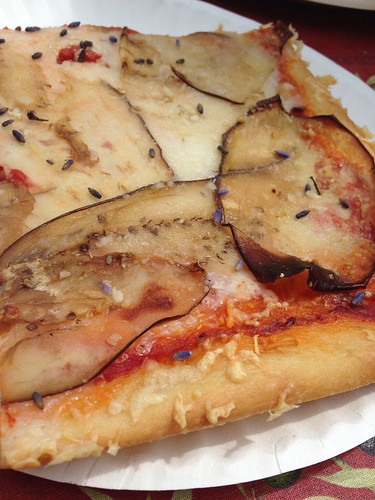
Lavender & eggplant pizza

Lavender is surprisingly not that popular in its native France. The famous blend titled "Herbes de Provence" (along with rosemary, thyme, savoury, oregano, etc.) was a marketing invention of a spice merchant that was well received anywhere else but in its namesake region. Lavender seems all delicate and proper; but it really is a big, demanding monarch when it comes to flavouring. Pair it with other big flavours such as yeast dough and rosemary to create a more rustic feel, as in Pure Bread's fantastic lavender-rosemary-honey whole wheat bread. Perhaps that's why it works so well with chèvre (goat's cheese) and with honey - big flavours that instead of competing with each other (as they would with anyone else) - they create a complete, sophisticated if rustic flavour profile. 

In liquors, you'd find lavender to be a part of complex, medieval-times concoctions such as Chartreuse (with honey and chamomile). In soft drinks, it is repeatedly paired with lemon, which I find not only redundant, but also ineffective in reducing the bitterness, and definitely particularly counterproductive in eliminating the soap association. Lavender + Lemon make a very nice smelling soap, but not a particularly appetizing beverage. An exception to this phenomenon is Frostbites' Meyer Lemon + Lavender Cordial, which is quite fun, even if not my favourite of theirs. 

Lavender is a popular component in flavouring Earl Grey tea - it accentuates the bergamot (after all, they both have linalyl acetate in common). There is also a specialty Lavender Earl Grey with lavender buds and all. I only ever tasted one that was to my liking, at the Empress Hotel in Victoria. All others were painfully bitter, or unpleasantly soapy. Which is also my experience with any and all lavender-flavoured chocolates (whether in bars or truffles). The only exception was my very own, delicately spiced Lavender Milk truffles with lavender Maillette essential oil, and also included lavender and cacao in Cocoa Nymph's owner's signature perfume. Otherwise, to eat a lavender-flavoured chocolate is like being punished for your sins by with force-fed soap. 

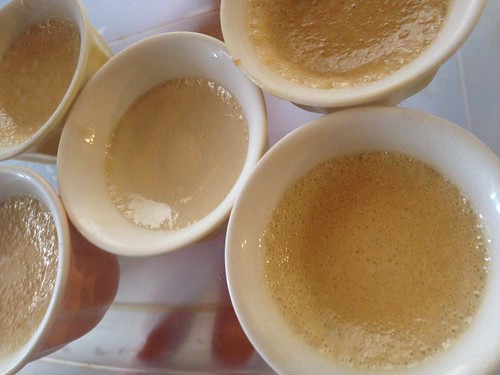
Lavender Creme Brûlée

In sweets and desserts, lavender has become a mainstay in our local Gelateria - both as a standalone, and in Earl Grey Tea gelato.  At home, try to make your own lavender ice cream, and experiment with the flavour in créme brûlée, lavender-violet-blueberry cupcakes (a winning combination), shortbread cookies (most recommended of all!) or, even better: Pumpkin Pie with Lavender Orange Shortbread Crust. You can also visit Sacred Mountain Lavender Farm for more lavender recipes.
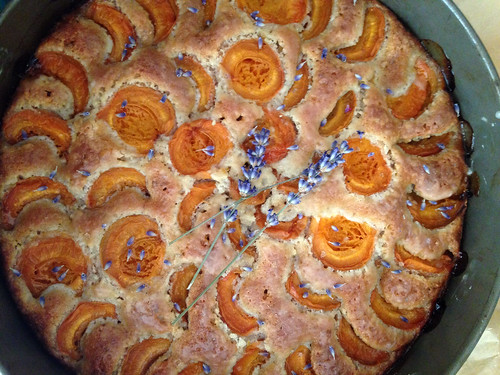
And, last but not least - my new favourite cake: Apricot, Walnut and Lavender Cake from Yotam Ottolenghi's latest book Plenty More (p. 308).

Apricot & lavender torte

Lavender Harvest

Lavender Harvest Festival at Sacred Mountain Farm
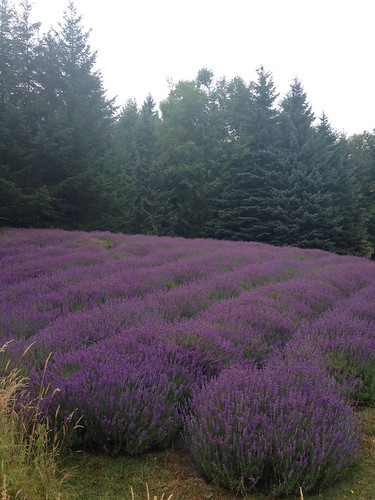
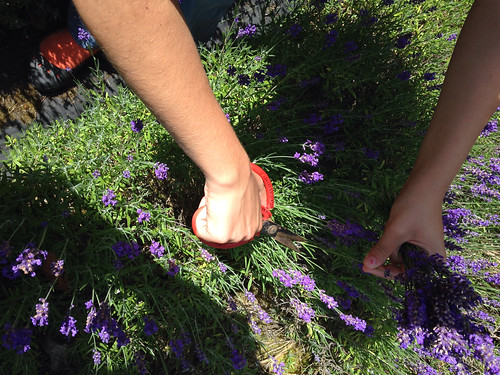
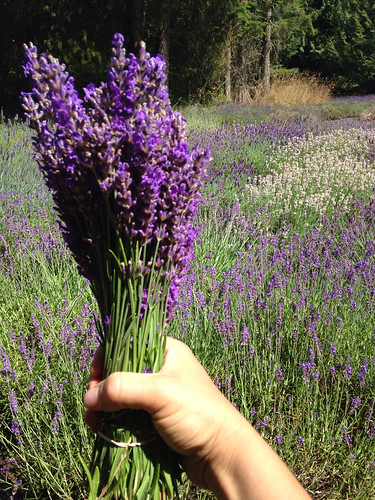
Last month I had the pleasure and honour to witness (and micro-participate) in lavender harvest at an organic lavender farm on Saltspring Island, BC. No amount of photographs of lavender field in full bloom could have prepared me for the tremendous multi-sensory beauty that they bestow upon those who visit them in person. 

Lavender Harvest & Steam Distillation Festival at Sacred Mountain Farm

Lavender Harvest & Steam Distillation Festival at Sacred Mountain Farm

Lavender Harvest Festival at Sacred Mountain Farm 

This summer I had the pleasure and privilege to witness and micro-participate in the lavender harvest and distillation at Sacred Mountain Lavender Farm. Nothing could have prepared me for how wonderful the aroma of hundreds of lavender shrubs simultaneously blooming would be. It's an all-immersing experience that is hard to describe in words.

Everything about those bushes - stems, leaves, buds and petals - contributes to a whole experience of a living, breathing lavender, the reassuring presence of the essential oil content, like a whiff at a lavender sachet in one's linen closet, promising a good night's sleep; and the smell of wet twigs and coumarin that emanates from the rest of the plant. I won't lie to you: it smelled quite familiar, like a rich green, paste-like lavender absolute, or an all-natural Fougère fragrance which would at least have some lavender absolute.

The fields, even though relatively small in size (only 2 acres), stretch upon the hillsides of sacred Mount Tuam, and create a very impressive view of Mediterranean-azure against the natural habitat of Canadian. They really are more blue than any other lavender I've ever seen. So saturated with colour, they are almost fluorescent. Nothing like the dull greyish-purple I've been accustomed to seeing.

As expected, the lavender grows in neat rows of puffy blue shrubs, with plenty of space between the rows to stroll around and tend to the plants. The earth between them lined with black sheets to conserve moisture (a most important thing especially with the drought this year!). Another pleasant surprise: As you walk through the rows, golden honeybees are abuzz on every step you take. They are very friendly, and won't disturb your harvest as long as you don't squish them. It was such a rejuvenating experience, that even my daughter, who usually gets rather puzzled and distressed about any agricultural tasks, knew exactly what to do and walked herself gracefully around the bees and made a beautiful lavender bundle all of her own.

Lavender Harvest & Steam Distillation Festival at Sacred Mountain Farm

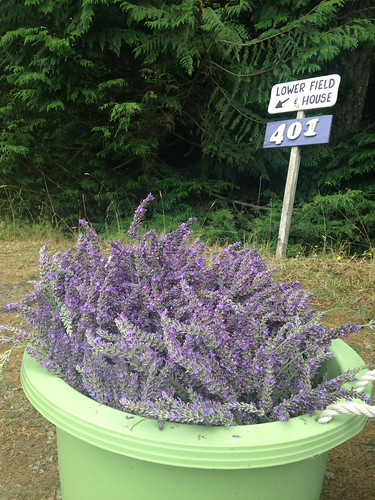
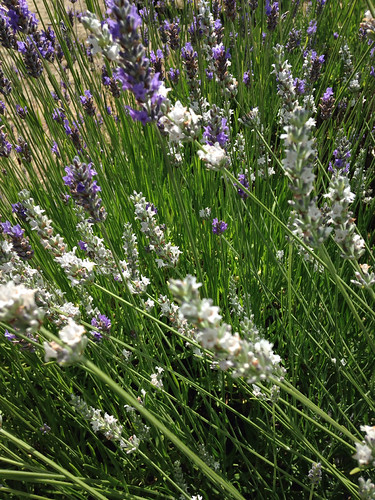
This farm grows 60 varieties of lavender in their educational demonstration plots, including some less known cultivars, such as a "Melissa" white lavender, and Maillette. They had a "U Pick" which is how Miss T and I were able to scavenge the rows of buzzing angustifolia bushes (which they called "English Lavender" for some peculiar reason; their Lavandin, by the way, was called "French"). To be perfectly accurate, this lavender is about as Canadian as could be. And I'd also like to mention: this is not the first lavender farm I've come across. There was one in Quebec near my dad's country house; there's one I heard about in the Okanagan near Osoyoos, and there is also  the Montrose Family Farm nearby on Bowen Island, who comes to the market every August with their lavender bouquets, sachets and handmade wands which they weave on the spot.

What's unique about this farm is that they are fully dedicated to lavender and also distill the oil and hydrosol on the spot. Every year in mid-July they hold a Lavender Festival to commence the lavender harvest season (which normally lasts between July 20 - September 1), and I was lucky to be visiting Salt Spring Island with my mom exactly that weekend. They had live concerts and dance performances, and this year they had an Italian theme so most of the music was arias from Italian operas, and an Italian chef created an entire menu using fresh lavender flowers from the farm - there was pasta with peas, fresh mozzarella, lavender and basil; pizza with eggplant and lavender, and a Sicilian ricotta pie that was on the drier side (a little like a bar with a shortbread-like crust on the bottom and top), and had a ricotta filling dotted with candied lemon peel and the non traditional addition of lavender, of course.

Lavender Harvest & Steam Distillation Festival at Sacred Mountain Farm
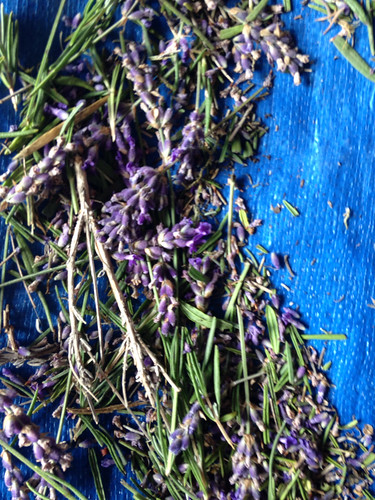
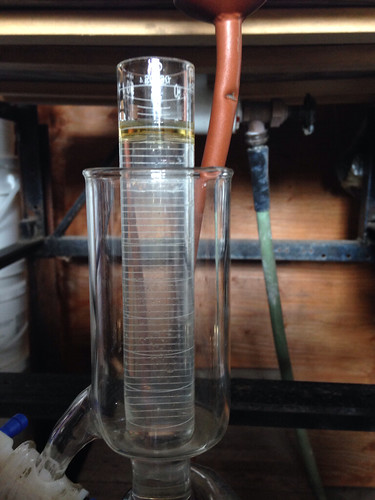
There was a distillation demonstration for a couple of hours, in which you could see how they separate the buds from the branches (after they dry them) for filling sachets, etc.); and also how the freshly harvested lavender is being fed to the still and see a little bit of the oil forming on top of the water (see below).

The yield at the farm is about 0.4%-0.5% oil to fresh plant matter in lavender (L. angustifolia), which means you'll need between 200-250 lb of lavender to make only 1 lb of lavender essential oil and 1% for lavandin (L. latifolia), which will require 100 lb to produce 1 lb of lavandin oil. This is low in comparison to a good lavender yield (110 lb to produce 1 lb of oil - which is about 0.9%) and even lower than an average one (150 lb, or 0.66%). I'm guessing there could be a few reasons for that, one being the climate, which is perhaps Mediterranean in Canadian terms; but rather not in Mediterranean terms. No matter how you slice it, the sun pattern is not the same on the 49th parallel as it is at the 43rd (where the Maritimes-Alpes in France are, for example); and moreover, even if there is less rain on Salt Spring than in the rest of the Lower Mainland - it's still plenty of rain, even in a drought year like this year.
Lavender distillation
But more important is the terroir, and in particular the altitude. The farm is situated just a little above sea level. However, lavender that grows in high altitudes not only produces more esters, but also more of them make it to the finished product. The reason is, that in high altitudes, the boiling point of water lowers down to 93c. Therefore, the oils can get produced at a lower temperature, and without destroying as much as the delicate components (such as esters). This is the two-fold reason why lavender grown in high altitude has a superior quality. Nevertheless, the oil at Sacred Mountain Lavender Farm is quite lovely, with hints of an almost chocolate-like sweetness.

Lavender harvest


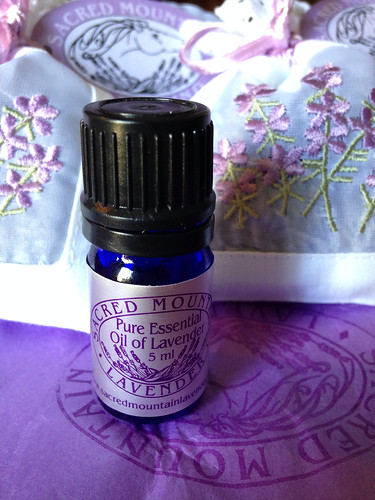
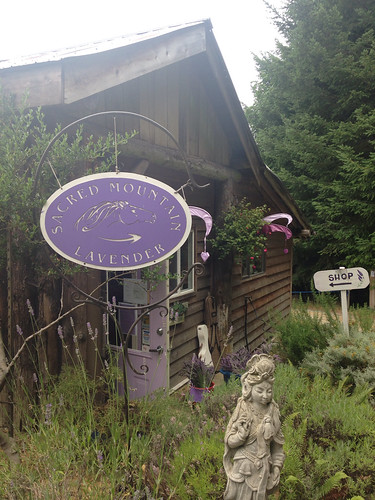
At the farm's shop you can get all their locally made lavender products, including lavender and lavandin essential oils and hydrosols, body butters and creams, culinary lavender products (herbal blends, lavender-scented teas and tisanes, etc.), and of course - lavender sachets. 

Lavender Harvest Festival at Sacred Mountain Farm

Lavender festival
Miss T and I are the king and queen of lavender, at least for the photo! 

Back to the top