

s

SmellyBlog

When Fir Met Fig


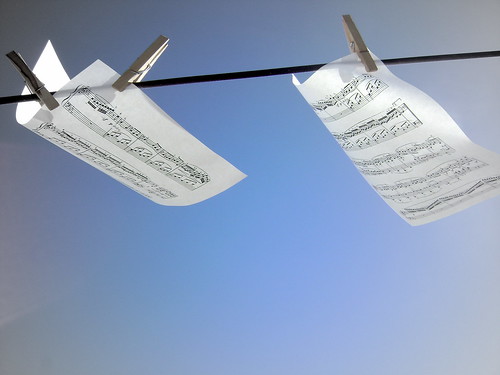
Quiet*, originally uploaded by imapix.

What happens when Italian fashion designers creates a Canadian-inspired perfume? Perhaps a polite Italian perfume?… Or maybe a combination of fig and fir, which is precisely what I find in this new perfume, which can be found only in Milano or Canada’s Holt Renfrew. For a change, a scent that lives up to both its image and packaging – woods and wetness.

To be more precise, the fir is not so important here as the vetiver. Don't expect fir needles either, I suspect the part used was the bark, and even this was notquite recognizable. Even the cedar note is not as dominant as the vetiver is. And while vetiver is, in fact, a root, it has distinctively woody presence, particularly when its cool and clean notes are played up a bit as in this fragrance.

DSquared2 is a perfect balance between wetness and woodiness. The two things that are in abundance in Canada, for sure. The wetness comes from a number of sources – namely violet, mimosa and cassie, which together create a somewhat fuzzy, but very wet opening – without feeling the list “aquatic”. Cedar, vetiver and sheer vanilla notes (vanilla CO2 comes to mind) underneath with a clean yet sensual wood accord.

Surprisingly, He Wood has a distinct “boutique” feel to it without feeling overly done or pretentious. It simultaneously reminds me of a few scents that I’m very fond of: Philosykos (fig and cedar), Mimosa pour Moi (mimosa and vanilla), Verte Violette (violet and a hint of vanilla) and Vetiver Extraordinaire. The idea of combining together all these elements is brilliant and very refreshing without smelling even the list like a male fragrance cliché. Plus, I must admit that the idea of getting these four fragrances for the price of one appeals to me on a certain practical level (it will make my accountant happy, for one thing, and save me some space too)...

Canada rarely appears in the way of inspiring perfumes. Although plenty of scents are inspired by travel, Canada just isn’t considered exotic enough to be considered for olfactory inspiration. This is not to say that Canada does not have any olfactory contribution to the world of perfume in the way of notes: many if not most of the coniferous notes are a by-product of the logging industry (one of the world’s – and Canada’s – largest). Fir, spruce, juniper - you name it; Canada pretty much got it all...

Perhaps this is because there are so very few Canadian perfumers (only three that I can think of at the moment – and one of them residing outside of Canada; if you know of more, please let me know). Or maybe it’s just because of Canada’s famously growing fragrance bans. Heck, even Elle Canada’s list of fragrances pales in comparison to lists recommended by other magazines. FYI: last time I checked there were merely two (2!) fragrances on their shopping guide (if you care to know, these were Betsy Johnson and Elizabeth Arden's Mediterranean) And they seem to be OK with that too…

In the case of DSquared2 He Wood, the Canadian inspiration may not come as much of a surprise. DSquared2 belongs to Ontario-born twins Dan and Dean Caten. Apparently, even their store in Milano has fake snow and Canadiana in doses that won't embarrass a tourist shop on Robson Strasse all over it.

The perfumer is Daphne Bugey, Firmenich (Daphne is also the creator of Kenzo Amour and Le Labo’s Bergamote 22, Le Labo Neroli 36 and Rose 31), and the notes, as one can gather from the packaging (and the sample card) are strangely divided into Air (White Fir, Vegetal Amber and Musk), Water (Violet Leaves, Violet Blossoms and an Aquatic Note) and finally – Wood (Vetiver and Cedarwood), which are the theme of the fragrance. While fig may not be listed, it definitely felt thoroughly throughout the composition, even if it might be an olfactory illusion...

According to OsMoz, these divide into the fragrance pyramid as follows:

Top note: Violet Leaves, Violet Blossoms, Aquatic Note

Middle note: Vetiver, Cedarwood

Base note: White Fir, vegetal Amber, Musk

He Wood is available at Holt Renfrew in Canada in the following sizes and formulations: Eau de Toilette 30, 50 and 100 ml / 1, 1.7 and 3.4 oz ; Moisturizing After Shave Balm 100 ml / 3.4 oz. Ladies may not need the aftershave, but could enjoy the scent just as much if not better than men. In fact, DSquared2 garnered a far more animated response from myself than from my perfume-loving brother. While I'm ready to take the plunge at one of those wood-framed bottles, he stated he wouldn't wear it often, even if it was handed to him as a gift. I guess he won't be getting any for Christmas... We ladies are quite known for our fondness of vetiver, eh?

Images of bottles courtesy of Sfilate.it

Verte Fig on Foodista

Arpège


Música Ligera, originally uploaded by Angel_SinClaudicar.

Arpège is a perfect name for this lovely and luscious and ever so classic fruity-aldehydic-floral from Lanvin. It opens with an arpege of lovely accords that are soft and sweet, as if played on a harp:
Vetiver-Ylang Ylang- Orange---
Sandalwood-rose-peach---
Neroli-lemon-bergamot---
Tonka-Tuberose-Jasmine---
And there is some bitter sweetness that strikes you a first, almost like tonka bean – or perhaps it is the tuberose, only that it is quite subtle and adds warmth like round ripples on the water.

Once the swirling arpeggio is quieted down, it settles on a magnificent rose theme – the rose is at the centre, and all the other flowers are just dancing around it like little fairies, and there is a fresh and uplifting citrus top note - What a delight!

Arpège is classy, a bit old-fashioned (in the good way as we all know) and so sweet and delicate. The aldehydes for sure add sophistication, but at heart it is a pure, loving floral with an eternal rosy glory.

Once settled on the skin, the dry down reveals an embracing, warm sandalwood-vetiver accord that is slightly sweetened by vanilla.

p.s. Just a little side note: For a long time I was convinced that if there is any aldehydic floral I should wear, it should definitely be Arpège and NOT No. 5. It was just so warm, and without the very heavy civette base that makes No. 5 smell so womanly. Arpege is a lot more young at heart. I never bought Arpège after all, I ended up with the No. 5 Parfum which I love – it is definitely not as innocent as Arpège is though. I love that woody drydown of Arpège. It’s pure and simple.

To read other reviews of Arpège, visit:

Bois de Jasmin

Now Smell This

Jicky


Writing letters to YOU, originally uploaded by !!! Monika !!!.

It’s impossible to write about Jicky (Aimé Guerlain, 1889) out of its historic context. Therefore it is mentioned here as the closing entry for the spontaneous Fougere series that has reflected my train of thought during my work on a particularly challenging perfume.

It was Fougere Royal and Jicky that marked the end of an era of single-note scents, and birth was given to sophisticated perfumes that represented abstract concepts rather than trying to duplicate nature (i.e.: soliflores and citrus/herbal colognes). It was also around the same time that the use of synthetic molecules commenced – first with coumarin, and a little later with vanillin. But you probably know that already… What I would like to mention is how remarkably similar is Jicky to Shalimar. Yes, yes, yes, we all know the story about how Shalimar was supposedly created by Jacques Guerlain dumping a sample of vanillin into a bottle of Jicky. This may or may not be true. But what’s certain is that the two are utterly similar. And more importantly – regardless of Jicky’s role in the birth of modern perfumery, it has, nevertheless, provided the blueprint of future Guerlain masterpieces to come. The structure, evolution, and last but not least – the Guerlinade at its root – are quite familiar, especially when smelled after experiencing scents such as Vol de Nuit, Shalimar, and even later creations as Chant d’Aromes and Chamade. When it boils down to the drydown, you’ll always find the Guerlinade in all the classics designed by the Guerlain dynasty.

Jicky opens with a burst of herbaceous freshness, marked by the presence of lavender and rosemary. Citrus is also an important component at the opening – some bergamot, but mostly - lemon singing in harmony with the underlining sweetness of tonka bean, it’s a luscious sorbet ready to be licked. Vetiver shows a glimpse of itself early on too, than dives back in and disappears into the landscapes of animalic woods. The heart, although containing some florals (rose, jasmine) does not feel floral. Just as in Shalimar – the bouquet’s role is to transform a collection of essences into one seamless olfactory tale. This is where the signature Guerlinade accord of iris, tonka bean and vanilla begins, creating a sensual skin-like warmth underlining what otherwise would have been a herbaceous-citrus cologne-type fragrance. With the animalic vibrations of opoponax, civet and a touch of leather, vetiver and the most miniscule hint of patchouli. When experiencing the parfum extrait the similarities to Shalimar become quite self-evident, from the overall bouquet to the final dry down stages, and with its overall skin-like sensuality.

The mood for Jicky, however, is completely different than Shalimar. While Shalimar takes you directly to the depth of seduction and desire, Jicky does so in a most subtle way. I wore it and wondered how strangely narcotic a lavender is in that context, all the while maintaining its dignified antiseptic qualities. Was it the English lavender that pinched Aimé Guerlain’s heart? Or was it something else he missed about his mythical first love in Engladn? Or, perhaps, it wasn’t meant for a woman after all, but rather for his young nephew who will later on follow his footsteps and unleash many more Guerlain fairytales.
Jicky is said to be initially difficult to accept by women to whom it was created, and was more popular with men. (Mouchoir de Monsieur, created by Jaqcues Guerlain in 1904 was meant to answer to that demand). It may not smell as significant or original at the moment, among the myriads of scents, not to mention lavender scents alone – but its remarkable survival over the past 118 years speaks for itself.

This review is for the pure parfum, which is far more concentrated and less citrusy/herbaceous than the Eau de Toilette.


Top notes: Lemon, Bergamot, Rosewood, Lavender, Rosemary
Heart notes: Vetiver, Jasmine, Rose, Orris Root
Base notes: Tonka bean, Opoponax, Patchouli, Civet, Benzoin


P.s. A couple of words regarding the bottle design: although the same bottle is often used for both Nahema and Vol de Nuit parfums, as far as I know, the champagned-stoppered bottle is the one originally designed for Jicky, apparently by Gabriel Guerlain – Aimé’s brother and Jacques’ brother, who was the manager of the Guerlain company at the time. If you know anything else about the bottle design, please share your knowledge with us.

Interested in reading more about Jicky? Visit:

The Scented Salamander

Bois de Jasmin

Fragrance Bouquet

"Perfumer of the Year" Contest at Escents Aromatherapy

Vancouver-based Escents Aromatherapy is running a fun contest this month: send your formula for an essential oil fragrance or synergy to sales@escentsaromatherapy.com for a chance to win a $500 Escents gift certificate, and be featured on Escents' newsletter and website in December.

The contest deadline is November 21st.
Back to the top